Dispatches from GA227: Commissioners get heated about missionaries, polyamory, psych assessments
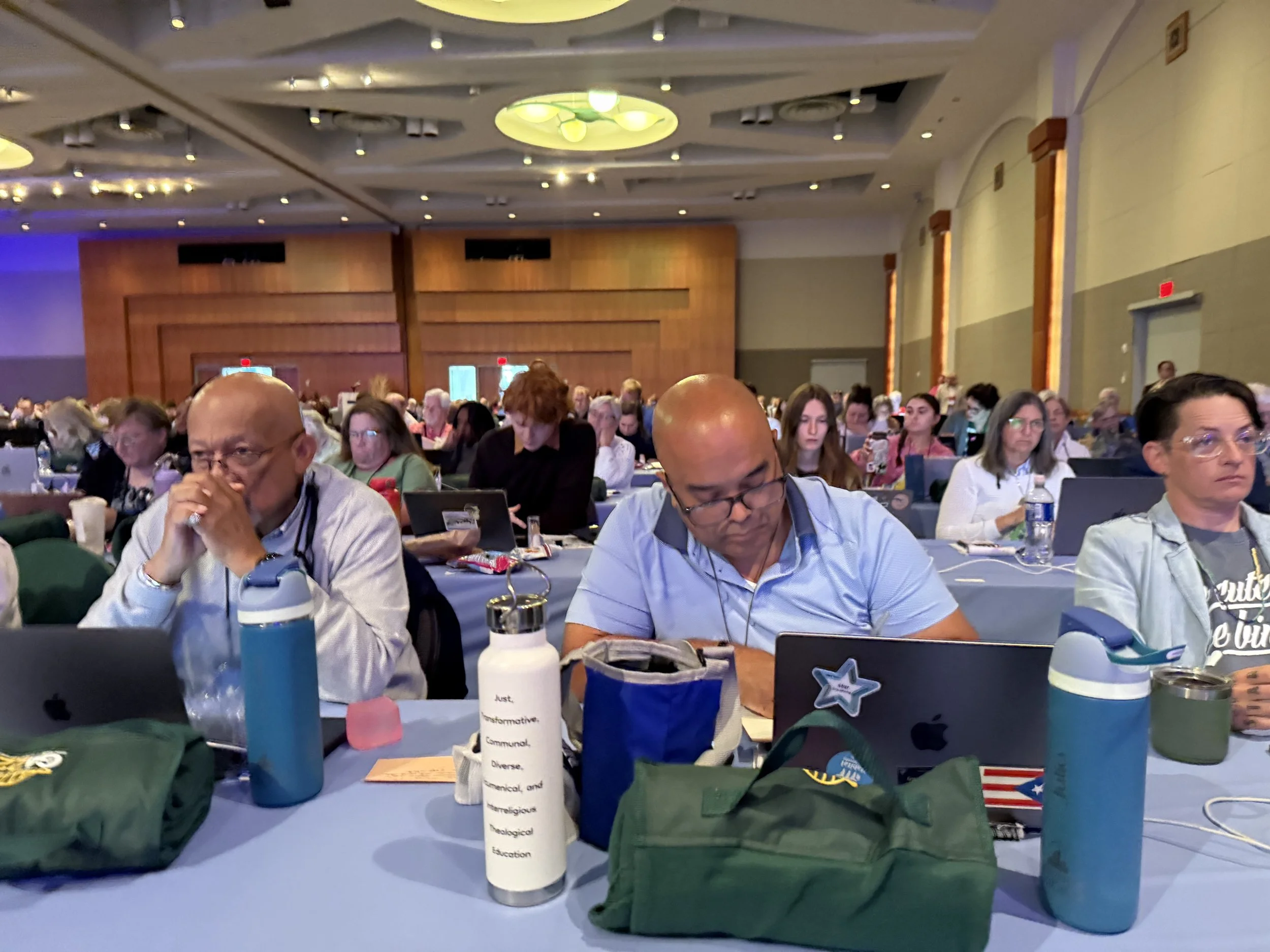
Photo: Gerald Farinas.
The second day of the General Assembly 227 plunged commissioners deep into the heart of constitutional interpretation, though the day began with the more immediate challenge of navigating the local climate.
Outside the Baird Center, the weather was scorching, with 90-degree heat, suffocating humidity, and full sunshine. Inside, however, the air conditioning was blasting so hard that the convention hall felt like a refrigerator. Navigating these temperature extremes has become an administrative task of its own, right alongside keeping up with the security checkpoints.
Security is an undeniable hassle this year, but it has been on everyone's mind given the underlying concerns about threats of violence in our current politically charged climate.
Between the security lines and the temperature swings, the community has grown much closer. I have spent the last four days bonding with my fellow commissioners and advisory delegates from our own presbytery. We even found a moments of profound, shared joy amid the long hours.
Of course, surviving these long sessions requires a bit of personal rebellion. I have had to resort to smuggling Diet Cokes into the building because the Baird Center is strictly a Pepsi-only facility. When I am not sneaking my choice caffeine fix, I am often cornered by fellow attendees who know I have my ears in a lot of places. People are continuously stopping me in the hallways to ask what I know about the Presbyterians for the Kingdom group. Long story for later.
When we were actually in our seats, a significant portion of the day focused on Overtures affecting Human Resources issues within our national offices, which are now known as Presbyterian Life & Witness, or PL&W. In the Presbyterian tradition, we certainly love our alphabet soup of Church bureaucracy.
While some of these administrative matters were straightforward, the assembly soon reached an emotionally charged moment during a discussion about the dismantling of the Presbyterian Mission Agency. This is the body that comprises our missionary offices around the world.
There were raw accusations from the floor that the Office of the General Assembly did not handle the transition well. Critics cited poor communication and intensely hurt feelings among mission agency employees. These workers claimed they were notified of the changes at the very last minute and were subsequently pressured not to discuss the matter due to nondisclosure covenants.
In response, our Stated Clerk provided a powerful example of faithful leadership. She issued an on-the-spot, deeply thoughtful apology for the hurt and pain caused by her office and by herself personally. Demonstrating true accountability, she acknowledged that she had made mistakes and admitted that her intentions did not match the painful outcomes felt by staff members.
She emphasized that healing trust and respect will take time, no matter how many times she apologizes. The restructuring is already done, but reconciliation is a journey that is only beginning.
Beyond these administrative and structural debates, the assembly also began grappling with a series of highly anticipated Overtures regarding sexuality. Because of the sheer depth and complexity of these items, I want to cover them thoroughly in a completely separate dispatch later this week.
For now, it is worth noting that the docket includes a proposal to study human sexuality specifically through the lens of modern scientific findings, as well as an Overture that attempts to strictly police monogamy among our teaching elders. These proposals have already sparked intense discussion, including an intricate debate on the floor over the exact definitions of polygamy versus polyamory.
Once the constitutional interpretation Overtures were successfully completed around 8:30 p.m., the assembly moved into the realm of my own committee work: Theological Education and Ordination.
Our first Overture was presented in eight distinct parts (or maybe less because I know we didn’t advance something from committee), an unusual format that set it apart from other business. Every single section is considered highly controversial.
The first part addressed a requirement for base training for members of the Commission on Preparation for Ministry, who advise inquirers and candidates for ordained ministry in the PC(USA). This is a role I personally hold back home in Chicago. The debate centered on whether to require this training every year or every 36 months, with the body eventually reaching a consensus to keep the requirement at a 36-month minimum.
The second part of the Overture immediately electrified the room. This proposal recommends that psychological assessments of inquirers for ministry take place much earlier in the ordination process rather than later.
During the discussion, it became clear that every presbytery already uses some form of psychological assessment, though many commissioners who were unaware of this thought the practice was being introduced for the very first time.
The topic struck a deep nerve. Commissioners lined up at the microphones to share personal, painful experiences with psychological assessments that tore open old traumas and wounds. These moving testimonies came from people on both sides of the debate, including those in favor of early testing and those firmly opposed. Co-moderators made sure commissioners know chaplains are available for those who need it considering the sensitivity of what has been shared by people.
Recognizing the weight of the conversation, leadership arrested the debate just before 10 p.m. to prevent the assembly from making poor decisions in a state of exhaustion.
The debate on this matter will continue tomorrow. I have prepared a formal statement to deliver to the plenary, should I decide I should make it, when we reconvene. This is an issue of immense gravity for me, as I come at this conversation not just as a committee member, but as the family member of several individuals who have been sexually abused by clergy.
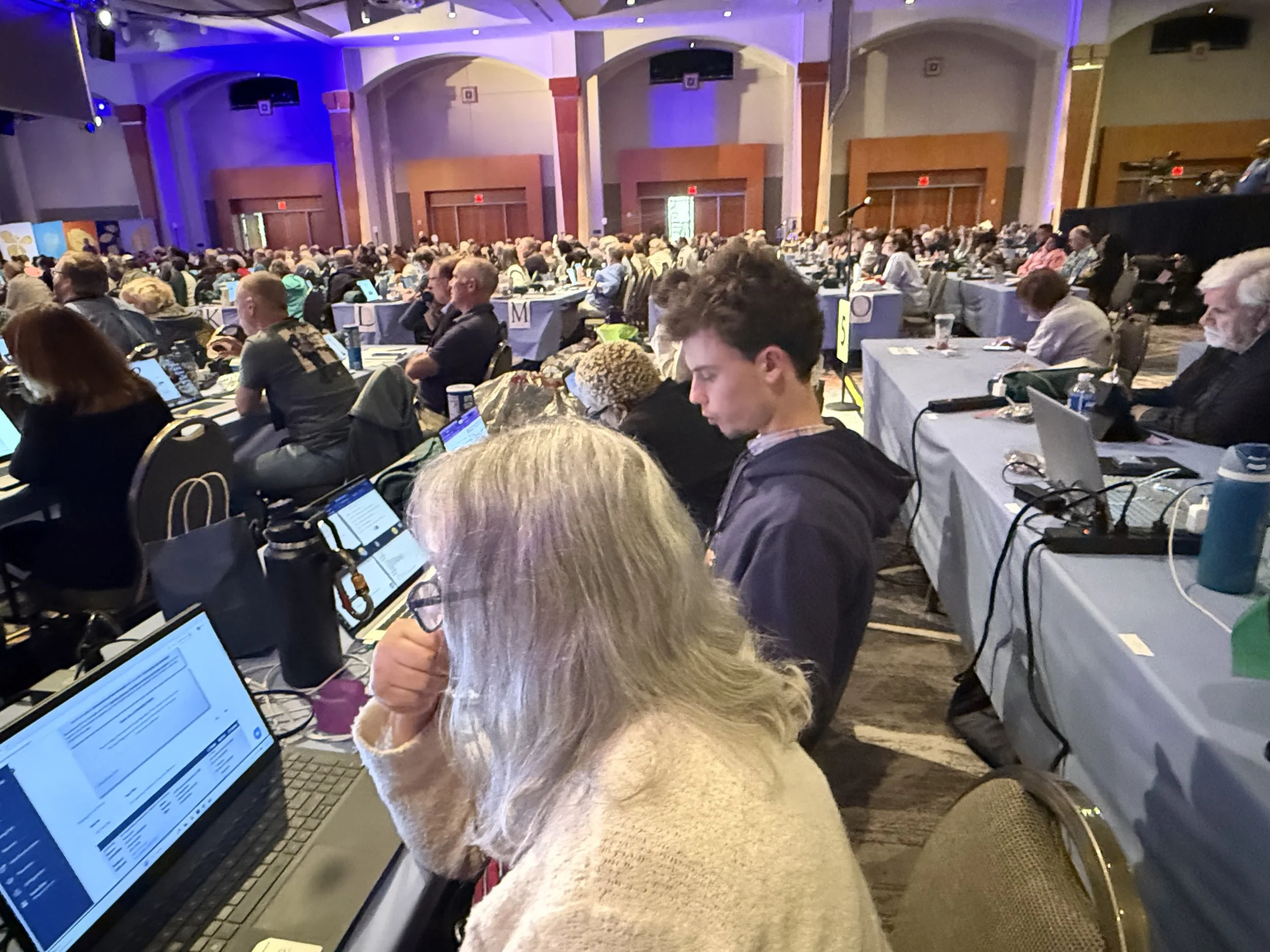
Photo: Gerald Farinas.