Linden Learning Collective brings children to New Community House on Thursdays
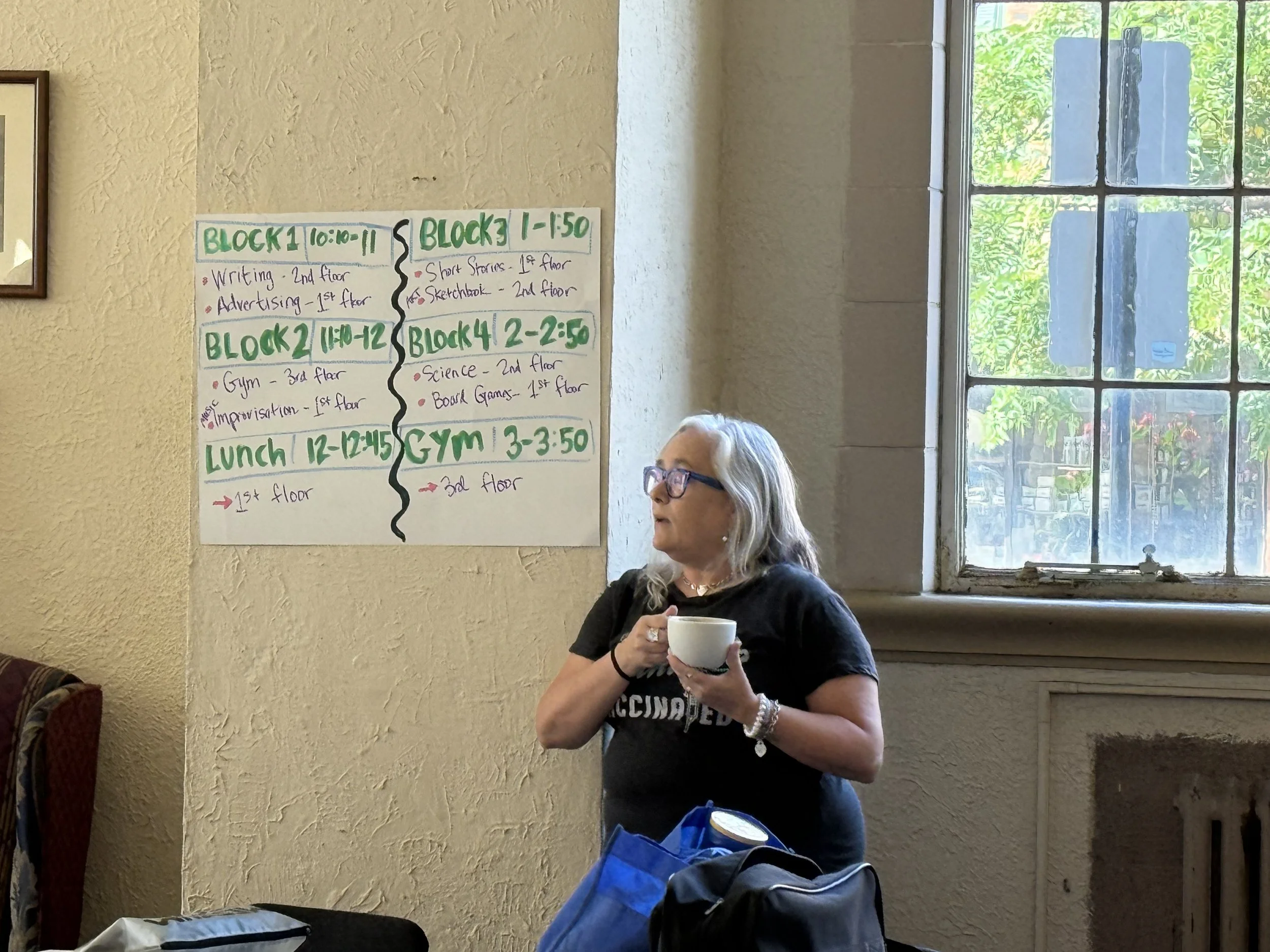
The Rev. Kristin Hutson introduces herself to students and parents meeting at The New Community House. Photo: Gerald Farinas.
On Thursdays during the school year, The New Community House in which our church lives, fills with the lively sound of young learners, shared conversation, and collaborative projects. The building serves as the weekly home for the Linden Learning Collective, a Chicago group that brings together families seeking a cooperative approach to independent education.
The partnership reflects the church's ongoing mission to serve as a welcoming neighborhood hub where community members of all ages can gather, learn, and grow together.
Linden Learning Collective is a safe space for LGBTQ and immigrant learners.
What is a homeschool collective?
A homeschool collective, often called a co-op, is a community of homeschooling families who pool their time, talents, and resources to enrich their children's education. While parents oversee their students' core academic studies at home, the collective offers a structured, regular setting where children and caregivers come together for group learning.
In these settings, parents, caregivers, and guest educators often share teaching duties according to their individual strengths and passions. Classes can span specialized science experiments, creative arts, theater, foreign languages, physical education, and literature discussions. By sharing the responsibilities of instruction and planning, families create a rich curriculum that would be difficult for any single household to deliver alone.
The benefits for homeschooled children
For students educated at home, a weekly collective offers significant academic, developmental, and personal advantages. Regular social connection stands at the center of the experience, offering children consistent opportunities to form lasting friendships, work collaboratively in teams, practice communication, and navigate peer dynamics.
Beyond social growth, participation allows families to access shared resources, specialized materials, and lab equipment that make hands-on learning engaging and accessible. Group discussions also expose children to diverse viewpoints, helping them practice listening to peers from varied backgrounds and articulately defending their own ideas. Meeting regularly in a dedicated space establishes a reassuring routine for the school week, giving young learners a grounded sense of belonging within a wider educational community.
By opening its doors to the Linden Learning Collective, Edgewater Presbyterian Church continues its tradition of supporting local families and investing in the neighborhood's youth.