Liturgical Colors: It’s purple season but for Presbyterians it never used to be
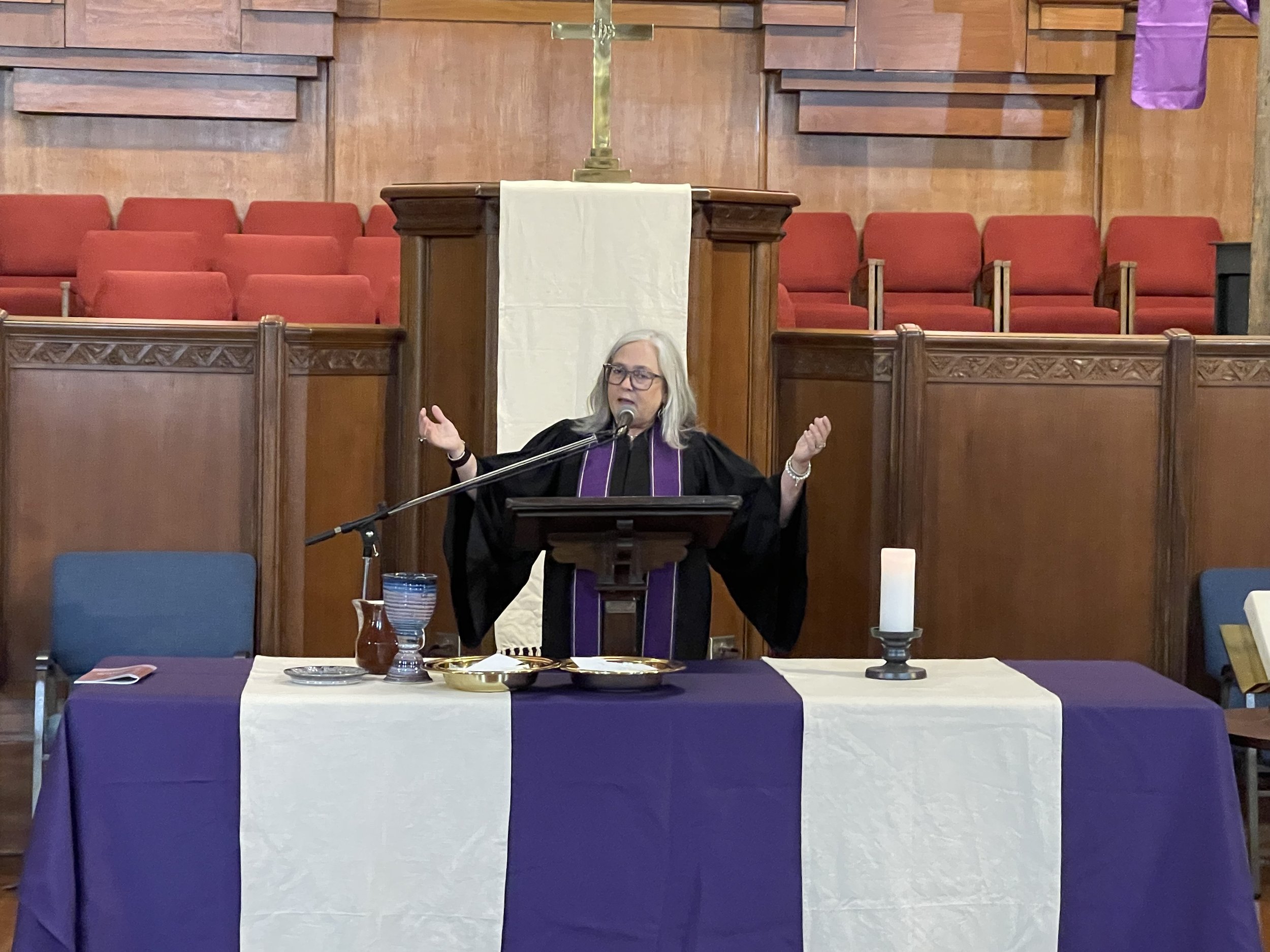
Photo: Gerald Farinas.
After our Session meeting finished up this past Sunday, I stayed behind in the quiet of the sanctuary at Edgewater Presbyterian Church. For several years now, I’ve been the one responsible for dressing our space.
We don’t have an official altar guild like you might find in some Catholic, Episcopalian, or Lutheran churches—you know, that dedicated team of volunteers who keeps everything in order. Instead, I’m the "army of old ladies" for my church, taking on the quiet task of preparing the room for worship.
There is something deeply personal about undressing the sanctuary alone, stripping away the old and preparing for what is next. With a real devotion to the poetry of liturgical color, I spent those moments dressing the Table of our Lord and the pulpit in royal purple. It felt like more than just a chore or a change of scenery. It felt like I was setting the stage for a sacred story.
For a long time, we Presbyterians didn't really do this. After hundreds of years of abandoning liturgical colors in favor of plain, white-walled austerity, we’ve only recently [comparatively] brought them back into the life of the Presbyterian Church (U.S.A.).
To some, it might just look like fabric, but to me, that purple is a visual sermon. It’s a way of reclaiming a language that our tradition once set aside.
Whenever I have the opportunity to preach during Lent, I bring this color into my own vestments too. I wear a purple tippet, which is a ceremonial scarf that looks like a stole that Pastor Kristin wears as part of her office of minister of Word and Sacrament. Putting my purple tippet on feels like a physical reminder of the weight and the dignity of the season.
Purple is such a complex color. It’s the shade of the sky right before the sun comes up, when the world is still dark but the light is starting to break through. That’s exactly what Lent feels like to me.
Lent is a season of waiting and looking inward, where we sit with our own shadows while keeping one eye on the horizon for the Resurrection.
When I look at the pulpit draped in that deep violet, it reminds me to slow down and sit with the gravity of the Gospel before the bright celebration of Easter arrives.
There is also a sharp, poetic irony in using royal purple. In the Gospel stories, the Roman soldiers put a purple robe on Jesus to make fun of him. They wanted to humiliate him and mock the idea that he was a king.
By choosing to use that same color today, we are turning that insult on its head. We are saying that the very thing they used to shame him is actually the sign of his true authority. The purple of Lent tells us that the one who suffered is the one who truly reigns.
Back in the day, purple dye was so expensive that only the richest people and the highest royalty could wear it. Using it in our humble church creates this beautiful tension. It forces us to think about a King who didn't come with an army or a crown of gold, but with a towel and a basin to wash feet. It’s a color of majesty, but it’s a majesty defined by sacrifice.
Bringing these colors back into our worship helps us experience our faith with more than just our ears. For a long time, we were a people of the Word and the intellect, which is great, but we are also physical people.
Seeing the Table dressed in royal purple gives our souls a place to rest. It reminds us that Lent isn't just a private, mental exercise. It’s a journey we take together, following the purple robe of the mocking all the way to the white light of the empty tomb.