Mental Health: Science says prayer has many uplifting benefits
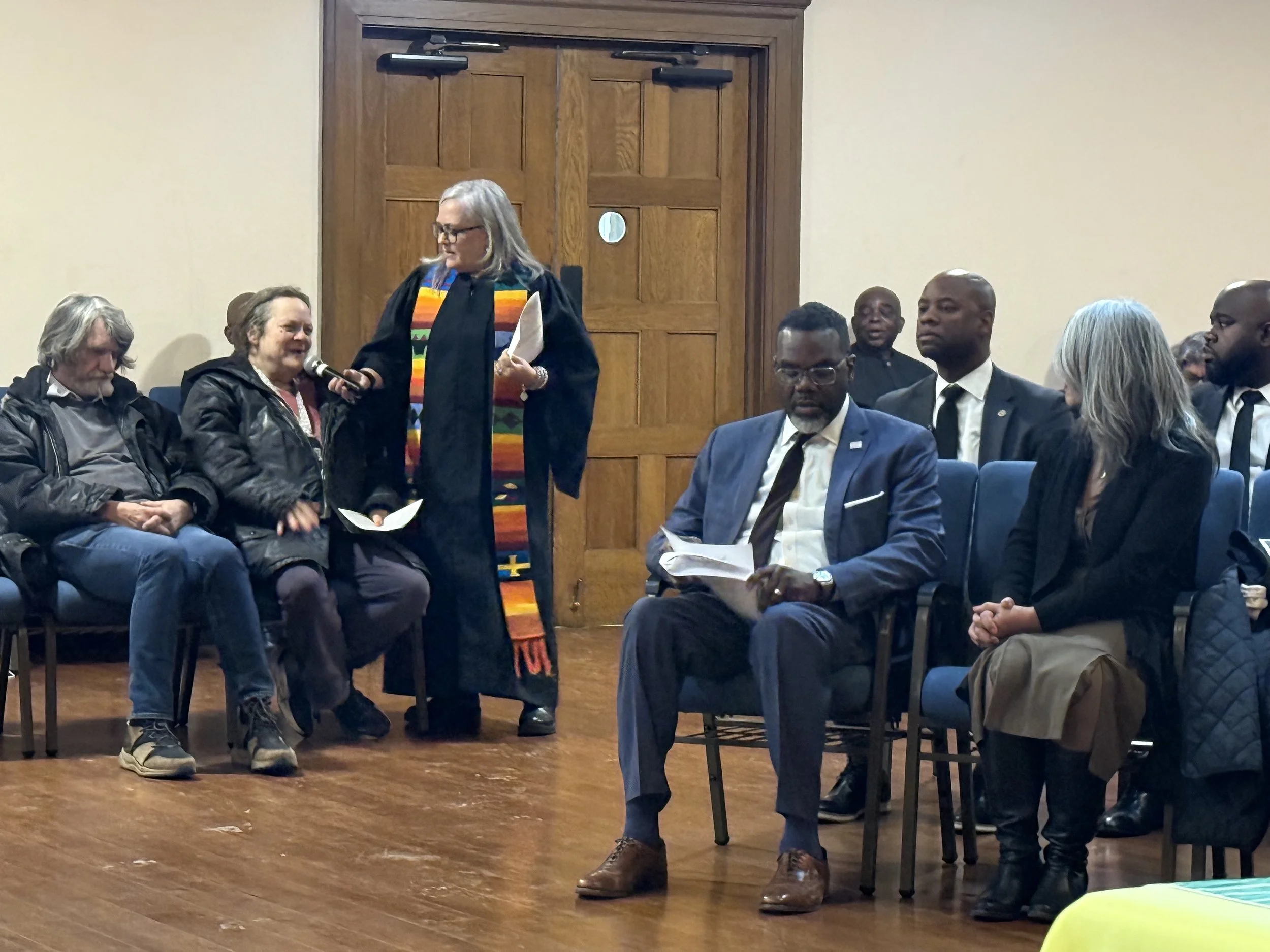
Open prayer at Edgewater Presbyterian Church. Also shown is Chicago Mayor Brandon Johnson and Ald. Leni Manaa-Hoppenworth (48th). Photo: Gerald Farinas.
The act of turning inward to talk to God is more than just a religious ritual. It is a powerful way to find balance in a noisy world. When we take a moment for prayer, we are not just reciting words. We are giving our minds a much-needed break from the constant rush of daily life.
This practice functions as a psychological and spiritual tool that can significantly impact our mental well-being. For many, it serves as a form of meditative reflection that provides a sense of calm and perspective during times of stress.
By creating a dedicated space for silence and intentionality, prayer helps reduce the immediate physiological markers of anxiety such as an elevated heart rate or high blood pressure.
Prayer works a lot like deep breathing or meditation. When you step away from your to-do list and focus on the divine, your body actually starts to relax. This can trigger the relaxation response, which is a physical state of deep rest that changes how we respond to stress.
That fight-or-flight feeling in your chest begins to fade as you hit a reset button for your brain. Instead of spinning out over things you cannot control, you are choosing to lean on a power far greater than your own. This cognitive shift helps to quiet the brain’s overactive stress circuits, particularly the amygdala.
It is easy to feel overwhelmed when we carry our burdens alone, but prayer changes that by giving us a place to put those worries. When we speak our fears and hopes aloud, they often start to feel more manageable. This shift in focus helps us build resilience.
Instead of seeing a dead end, prayer helps us see a path forward. It reminds us that we are part of a bigger story, and that sense of connection is a massive boost for our emotional health. Stepping back to pray allows for a wider view of problems, making them feel like something we can handle rather than something that will crush us.
In the long history of the Christian faith, few works have captured this simple power quite like "The Practice of the Presence of God." This collection of letters and conversations by Brother Lawrence, a 17th-century monk, was required reading during my freshman theology class at Loyola University Chicago. It is a book that stays with you because it challenges the idea that prayer only happens when you are kneeling in a pew.
Brother Lawrence was a humble lay brother who spent much of his time working in the monastery kitchen. His big insight was that we can communicate with God just as easily while washing dishes or running errands as we can during a formal service.
He believed that the key to mental and spiritual peace was to develop a constant, quiet conversation with the divine throughout the day. For anyone feeling overwhelmed by a busy schedule, his approach is a lifesaver because it turns every mundane task into an act of worship and a moment of calm.
So much of our prayer life in the Presbyterian Church (U.S.A.) involves giving thanks, and there is real science behind why that feels so good. When we spend time focusing on what we are grateful for, our brains actually get better at spotting the good things in our lives.
This consistent focus on gratitude is linked to increased levels of dopamine and serotonin, the neurotransmitters responsible for happiness and emotional stability. It does not mean our problems disappear, but it does mean we become better at finding joy even in the middle of a hard season. It turns our attention away from what we lack and toward the many ways we are blessed.
Many others throughout history have discovered this same truth that prayer and mindfulness are the fuel for a resilient life.
Dr. Martin Luther King, Jr. once spoke about the necessity of this connection, saying that to be a Christian without prayer is no more possible than to be alive without breathing.
Abraham Lincoln, facing the immense weight of the Civil War, admitted the psychological necessity of turning upward when he said he had been driven many times to his knees by the overwhelming conviction that he had nowhere else to go.
Even from a Buddhist perspective, the power of a centered mind is vital. Thich Nhat Hanh once observed that through our tea, we can see the clouds and the rain, and through our mindfulness, we can touch the peace and the wonders of life.
Whether it is through the quick prayers of a busy professional or the deep silence of a monk, the goal remains the same. Like the lessons learned back at Loyola, the point is to realize that the Sacraments and the Gospel are not confined to the walls of a church. When we practice the presence of God, we are essentially building a mental sanctuary that we can carry with us wherever we go.
While we often pray by ourselves, the act itself connects us to the whole Church. Knowing that others are praying with us and for us creates a deep sense of belonging. That connection is one of the best defenses we have against loneliness.
Whether you are sitting in a quiet room or standing in a sanctuary, prayer is a reminder that you are heard, you are seen, and you are never walking this path by yourself. It is a simple, beautiful way to keep your heart light and your spirit strong.