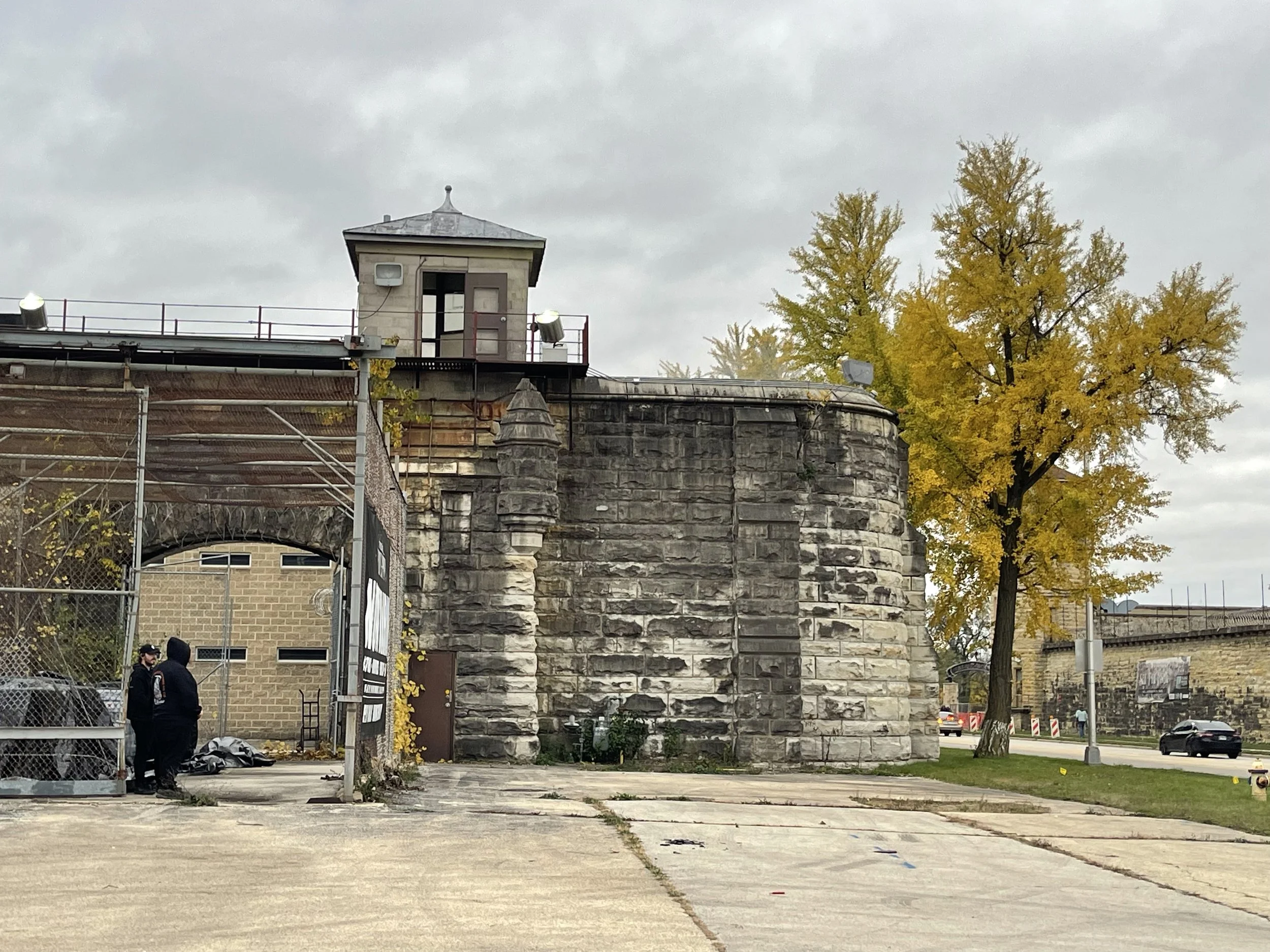
Joliet Prison. Photo: Gerald Farinas.
Most people don’t think of The Shawshank Redemption as a horror story. It lacks ghosts, monsters, and jump scares. But if you peel back the layers, it may be one of the most terrifying tales Stephen King ever penned.
Imagine this: you’re a quiet, law-abiding man. Suddenly, the justice system accuses you of a heinous crime you didn’t commit; a heinous identity you never were. You’re arrested, convicted, and tossed into one of the darkest prisons that exists. The evidence doesn’t matter. Your pleas of innocence don’t matter. Your existence doesn’t seem to matter.
That’s the horror of Shawshank.
Andy Dufresne, the protagonist, isn’t just incarcerated—he’s buried alive inside a corrupt system.
He’s gaslighted into powerlessness. Day by day, he’s told he is less than nothing. The warden quotes the Bible while laundering money and ordering murders. The guards beat inmates into submission. And the legal system, which is supposed to protect the innocent, closes its ears. Andy is expected to rot in a cage for the rest of his life, stripped of dignity, stripped of truth, stripped of hope.
There are no demons in Shawshank, except the very real ones that wear uniforms and sit on benches and call themselves justice—and the pols that put them there.
And here’s the real kicker: it’s not just fiction.
The world today is full of Shawshanks.
One of the most glaring examples is playing out right now in El Salvador, in a prison known as CECOT—the Centro de Confinamiento del Terrorismo, or Terrorism Confinement Center.
Thousands of men, innocent, poor, without trial, have been swept up in a brutal government crackdown.
They’re forced into cages, tattooed by association, and silenced by a regime that equates order with oppression.
Much like Andy, most of them don’t belong there. But the system doesn’t care. It’s designed not to.
The Shawshank Redemption is a horror story because it reveals what happens when truth is irrelevant, when justice is a costume, and when a human life can be disappeared into concrete and iron without recourse.
It’s horror rooted not in fantasy—but in reality.
King was never just writing about Andy Dufresne. He was warning us what happens when a society accepts mass incarceration, corruption, and silence.
The question now is, “Are we listening?”
Or are we, like the inmates of Shawshank, learning to become “institutionalized”—accepting the horror because we’ve forgotten the taste of freedom?
In El Salvador, in American prisons, in systems all around the world—Shawshank is still happening. And that’s more terrifying than any ghost.