
Credit: Harper.
When William Peter Blatty published “The Exorcist” over fifty years ago, he set the whole story in the middle of the Roman Catholic world. You see the priests, the collar, the holy water, and the Latin prayers. Most people remember the famous movie for the green pea soup, the loud head-spinning, and the jump scares.
But when you actually pick up the book and read the sentences, you find something much quieter, richer, and honestly very moving. As an elder in the Presbyterian Church (U.S.A.), with roots in Reformed theology, I never thought I would find so much familiar spiritual ground inside a famous horror book.
Under all the Catholic ritual, you can hear a clear Reformed heartbeat.
The first big thing that jumps out is the honesty about total depravity.
In our Presbyterian tradition, total depravity doesn’t mean that every person is purely evil every minute of the day. It simply means that human brokenness and sin have touched every single part of us: how we think, how we choose, our physical bodies, and our feelings. Nothing is completely spotless.
When the demon hurts young Regan MacNeil in that Georgetown bedroom, it doesn’t just shove beds around or make creepy noises. Its real goal is shame, cruelty, filthy talk, and lies. It goes straight after the secret guilt, the sadness, and the private hurts of the adults in the room.
Blatty shows that people can’t simply fix themselves or save themselves by being nice. Evil is real, ugly, and aimed right at the image of God in human beings.
At the exact same time, the story refuses to act like God and the devil are equal rivals, which is something we care about deeply in the Reformed faith.
We believe in the total sovereignty of God. The devil isn’t God’s equal match in a boxing ring where the winner is up in the air. The devil is just a created thing, held on a short leash by God.
You see this clearly through Father Lankester Merrin. When Merrin walks into the house, he is an old, tired Jesuit who just got back from digging in the dirt in Iraq. His heart is bad, and he has to keep taking heart medicine just to stay on his feet.
But he brings a calm peace with him because he knows who holds the real power. Merrin tells Father Karras that the demon is not really trying to ruin just the little girl. The demon wants to break everyone else who is watching. It wants to push them into deep despair until they think God could never love them, that forgiveness is fake, and that hope is gone.
Merrin understands that evil makes a lot of noise because it has already lost the war. God lets it bark, but it cannot go past the limits God sets. Merrin doesn’t treat the devil like a god. He treats it like a broken rebel that has to bow before the Creator. The cross and the empty tomb already settled the score.
I also really liked how much the book respects doctors, medicine, and human reason. Long before anyone talks about an exorcism, the characters run Regan through every medical test they can think of: brain scans, blood tests, spinal taps, and long talks with psychiatrists.
For a Presbyterian, this looks just like common grace. We believe God gives medical skill, scientific brains, and healing tools to doctors whether they go to church or not. Using science and checking every natural medical fact is not a lack of faith; it is good stewardship of the minds God gave us.
Father Damien Karras is a psychiatrist himself, and he checks out every medical explanation first. He refuses to take a quick supernatural shortcut. He honors good medicine before admitting that some spiritual brokenness goes deeper than a doctor can fix.
The real heart of the book is the personal struggle between faith and doubt in Father Karras. He is worn out, questioning his job, and beating himself up because his poor mother died all alone in New York. His well is completely empty. His pain will feel familiar to anyone who has ever tried to serve the Church while dealing with real grief and honest doubts.
In our tradition, we know faith is not some happy feeling we force ourselves to have. Faith is a gift from God that holds on to Christ even when our hands are trembling.
When Karras finally steps in to save the little girl, he doesn’t do it with magic words or church power. He does it through a hard, loving sacrifice. In that quiet, painful moment, the book points straight to the heart of the Gospel. Real help in a hurting world doesn’t come from human pride or strength, but from sacrifice and unearned grace.
Having just turned the final page on this remarkable book, I’m not ready to leave Blatty’s world just yet. I’ve decided to dive straight into his second novel, “Legion,” eager to see how these big questions of evil, goodness, and grace continue to unfold.
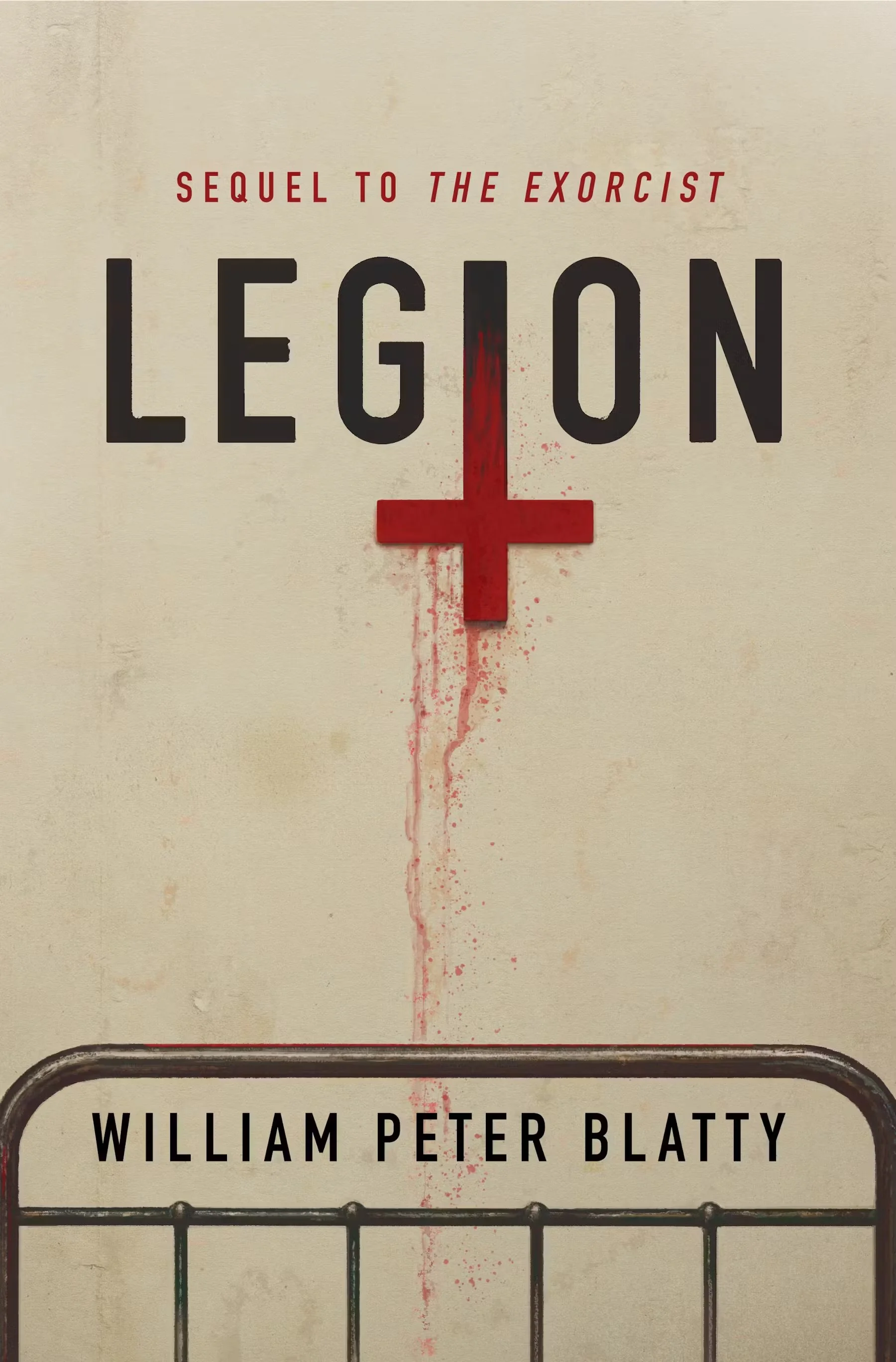
Credit: Macmillan Publishers.