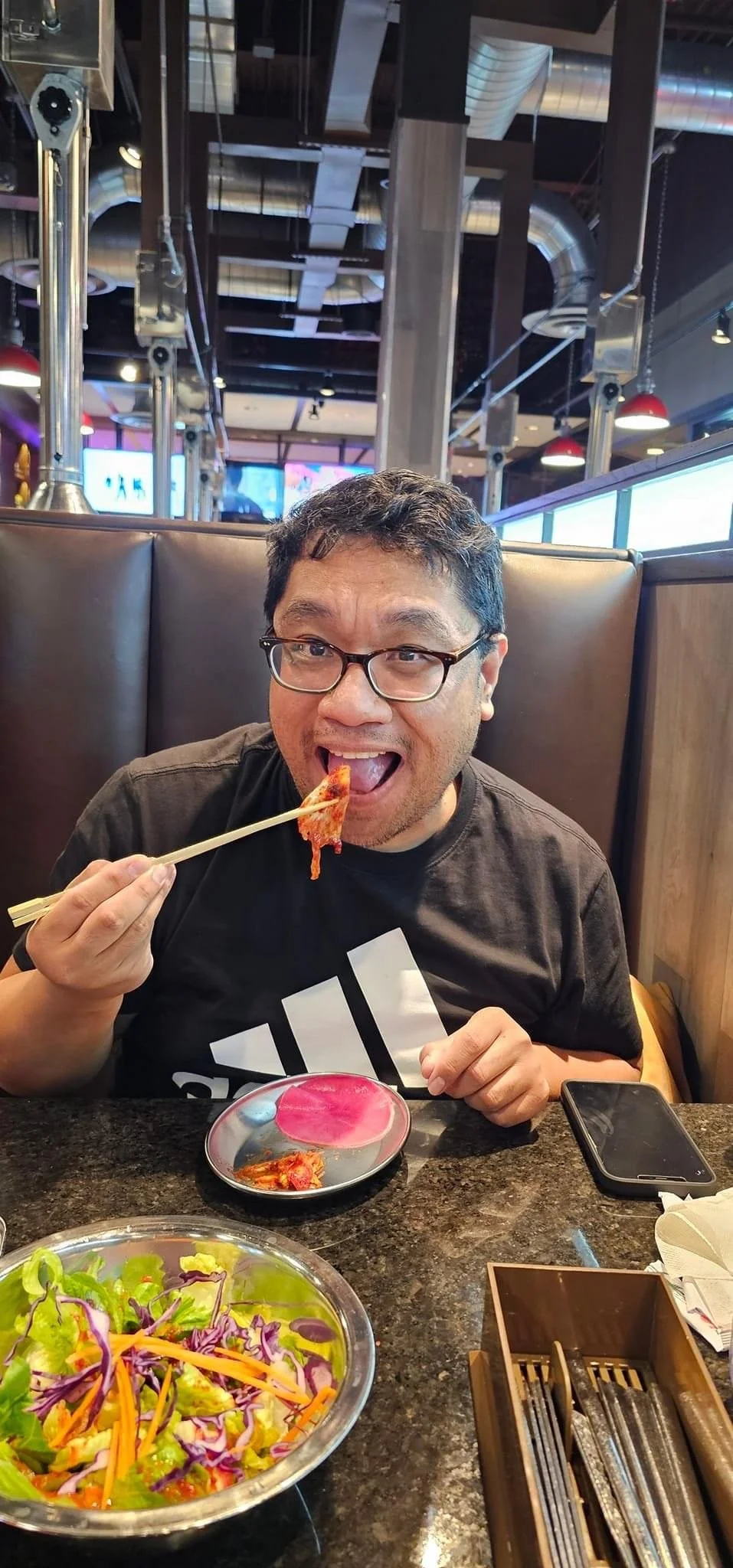
Photo: Gerald Farinas.
This question came up at Lou Malnati’s in Oak Park. I was asked about my Presbyterian community here in Chicago which led to other related topics like, “Do you know [so and so]?” as if we all Presbyterians know each other.
Odd. They ask the same about other gay people they know that I might know.
(Turns out I did know the guy.)
I was born and raised in Hawaii and growing up, I was surrounded by Korean Presbyterian churches in Hawaii.
In over 20 years living in Chicago, I’ve driven through suburbs like Arlington Heights, Mount Prospect, Des Plaines, and Glenview, passing dozens more Korean Presbyterian churches.
I’ve watched one of the most amazing stories in modern Christianity unfold in both places: How Korean churches went from receiving American missionaries to becoming mission leaders themselves.
I’m not Korean, and I’m not from the mainland United States. I’m an Asian American Presbyterian who has watched this change happen in two very different places. First, in Hawaii’s multicultural environment, and later in Chicago’s suburbs.
In both places, Korean churches have become vital parts of the Christian community.
It started with American missionaries, of course
In 1884, Presbyterian missionaries like Horace Allen and Horace Underwood first went to Korea.
(No one names their kid Horace anymore.)
Through my friendships with Korean church members over the years, I’ve learned that these early missionaries did much more than start churches. They built hospitals, schools, and universities that helped create modern Korea. Revered institutions like Yonsei University and Severance Hospital started as Presbyterian missions.
What really strikes me about this early time is how the missionaries wanted Koreans to lead their own churches.
Unlike other colonial projects that kept foreigners in charge, Presbyterian missions followed three simple goals: Korean churches should support themselves, govern themselves, and spread the gospel themselves.
This turned out to be very smart. Korean churches didn’t just survive when the missionaries left. They grew beyond what anyone expected.
During the Japanese occupation from 1910 to 1945, Presbyterian churches became deeply connected to Korean identity.
Many of my Korean Presbyterian friends in Hawaii have parents and grandparents who told stories about how the Church gave them spiritual strength and helped them resist Japanese rule.
When Korean Christians joined the March 1st Movement in 1919, they were showing that Christianity had become truly Korean, not just American Christianity copied in Korea.
Schisms: Presbyterians split apart, too, in Korea
Korean Presbyterianism broke into so many different groups, more so than in the U.S. Having watched our own Presbyterian Church (USA) deal with disagreements, I understand why and how.
The splitting started during the Korean War and got worse as Korea became democratic.
Churches argued about whether the Bible should be read literally or not.
Personal fights between important pastors led to church splits, with congregations choosing sides based on who they liked rather than what they believed.
Political views during the Cold War, whether to support America, reunification with North Korea, or fight communism, also divided churches.
But maybe the biggest reason was that Korean Christianity grew so fast.
Korea went from less than 1% Christian in 1900 to about 30% today.
In Hawaii, I’ve watched Korean churches multiply and sometimes split because they couldn’t handle this amazing growth. Sometimes growing meant dividing rather than staying together.
Today, there are major groups like the Presbyterian Church of Korea (PCK), the Presbyterian Church in the Republic of Korea (PROK), and dozens of others.
Even with all these divisions, Korean churches still run universities, hospitals, and community programs.
In Hawaii, I’ve seen how these different Korean Presbyterian groups keep their differences while working together on things like helping immigrants and serving the community.
They’re the missionaries now
What amazes me most, after watching this relationship for decades, is how completely things have changed.
The PCUSA now works with Korean Presbyterian churches as equals, not as the older brother helping the younger one.
I’ve seen this change in Hawaii, where Korean Presbyterian churches often start new programs that mainland Presbyterian churches later copy.
The PCUSA has missionaries in Korea. Since 2013, Kurt Esslinger and Hyeyoung Lee worked with Korean churches as partners. Unzu Lee worked as a regional contact person, too.
The PCUSA mission in Korea is currently being overhauled to become part of a new ministry called Global Ecumenical Partnerships. That means our missionary work in Korea, and other countries, will evolve.
It has to evolve because Korea is doing more missionary work of their own without us.
The turnaround is huge when I think about how Korea now sends 799 missionaries to 77 countries. That’s way more than most American churches send.
Korean Presbyterian churches often have more money than their American partners. Their ways of growing churches and praying are now influencing American congregations, including some in Hawaii and here in Chicago.
Witnessing Growth: From Hawaii to Chicago suburbs
From where I started in Hawaii’s multicultural environment, I’ve watched how Korean Americans balance their heritage with being American Presbyterians.
Over the past twenty years living in Chicago, I’ve seen this growth continue in a completely different setting. Driving through the suburbs of Arlington Heights, Mount Prospect, Des Plaines, and Glenview, I pass dozens of Korean Presbyterian churches.
What started as a few small congregations has become a network of thriving churches that serve the large Korean American population in these northwest suburbs.
The Korean Presbyterian Church Abroad (KPCA) has grown to include 984 pastors, 22 regional groups, 470 local churches, and over 81,000 members.
This growth is visible everywhere Korean Americans have settled, from Hawaii’s multicultural neighborhoods to Chicago’s northwest suburbs, where Korean Presbyterian churches anchor thriving immigrant communities.
Their formal partnership with the PCUSA, approved in 2008, recognizes them as full partners in Christ’s work.
In Hawaii, where Asian Americans are the majority, and now in Chicago’s suburbs, I’ve seen how Korean Presbyterian churches connect different cultures.
They keep strong ties with churches in Korea while fully participating in American Presbyterian life. Their services in both languages, cultural celebrations, and community work make our whole regional church stronger.
But I’ve also seen the struggles.
Second-generation Korean Americans often feel caught between honoring their parents’ traditions and fitting into broader American culture.
Some people have wondered if Korean-language churches create separation, but from my Hawaii-based perspective, I see them as creating needed space for people to express their culture within the Christian community.
Today’s Partnerships: Peace, education, and mission
Today’s partnerships focus heavily on peace. It is something that matters to all of us in the Pacific Rim region, where we understand the tensions around Korea.
The Presbyterian Peace Network for Korea sponsors programs like the Korea Peace Journey, bringing Americans to visit the border between North and South Korea.
As someone who grew up hearing stories from Korean friends about family members in North Korea, these peace efforts feel personal even to me.
Educational partnerships stay strong, with connections to Korean schools like Yonsei University and church seminaries. These relationships now involve equal exchange, with Korean church ideas increasingly influencing American Presbyterian thinking.
In Hawaii, we benefit from visiting Korean scholars and exchange programs that help us understand Asian Christianity better.
The National Council of Churches in Korea celebrated its 100th anniversary in 2024, hosting church representatives from around the world. Reading about those celebrations reminded me of similar gatherings I’ve attended in Hawaii, where Korean church leaders share their century-long work for democracy, human rights, and Korean reunification.
Learning from differences
I need to be honest about the disagreements I’ve seen.
Many Korean Presbyterian churches hold more conservative views on the Bible and social issues than the mainline PCUSA.
Who can be ordained? Not all of them are comfortable with women as pastors.
How should social justice issues be approached? Not all of them agree that marriage equality is a right to be given to same-sex couples.
But these disagreements also create chances for learning from each other.
Korean churches bring deep commitment to prayer, evangelism, and missions that challenges more progressive Presbyterian churches.
American Presbyterians contribute experience in welcoming everyone and working for social change.
Instead of seeing these differences as problems, I’ve learned to see them as gifts that make both traditions stronger.
A Pacific islander’s view on global partnership
As the PCUSA changes from traditional missions to Global Ecumenical Partnerships, the Korean relationship shows how 21st-century Christian cooperation should work.
Growing up in Hawaii taught me that healthy multiculturalism doesn’t erase differences. It celebrates them while building real relationships across cultures.
This change reflects bigger shifts in world Christianity. Korean Christianity’s explosive growth shows that the Gospel takes deepest root when it becomes truly local.
Korean churches didn’t just copy American Presbyterian forms; they changed them into something distinctly Korean but still clearly Reformed.
An observer’s gratitude
As a Filipino American who chose Presbyterian ministry partly because of the Korean Presbyterian witness I saw growing up in Hawaii and continued to observe in Chicago’s suburbs, I’m grateful for how this partnership has grown.
When I see American Presbyterians learning prayer practices from Korean churches, when Korean missionaries serve around the world, when Korean American churches bridge cultures in places like Hawaii and Chicago, I see the global body of Christ working as God intended.
The challenges are still real. Political tensions around Korea, theological differences within our churches, and generational changes all need continued attention. But these challenges exist within a relationship that has been transformed by 140 years of shared faith and growing partnership.
Maybe most importantly, this partnership shows that real Christian unity doesn’t require everyone to be the same.
Korean Christianity isn’t American Christianity with Korean decorations; it’s truly Korean Christianity that’s still clearly Presbyterian.
As someone who grew up in Hawaii’s “mix plate” culture, I appreciate how this partnership shows unity within diversity.
Lessons for Asian American Presbyterian identity
This Korean Presbyterian story has shaped my own understanding of what it means to be an Asian American Presbyterian.
It shows that we can keep our cultural differences while fully participating in the Reformed tradition.
We can honor our Asian heritage while embracing American Presbyterian values of social justice and asking hard questions about faith.
In Hawaii, where no single ethnic group dominates, I’ve learned that strength comes from embracing our multicultural identity rather than trying to fit into predetermined boxes. The Korean Presbyterian partnership with the PCUSA models this approach on a global scale; keeping differences while building real unity.
The missionary movement that started with Americans going to Korea has become a partnership where everyone gives and receives, teaches and learns, serves and is served.
For a Filipino American elder who has watched this transformation from Hawaii’s multicultural Presbyterian community and continued to witness Korean Presbyterian vitality in Chicago’s suburbs, this change represents God’s kingdom breaking into our world, one relationship, one church, one partnership at a time.
From my Pacific island perspective, where different cultures naturally blend while keeping what makes them special, the Korean Presbyterian partnership offers hope for how global Christianity can thrive in our increasingly connected but diverse world.