Ask the Elder: Why don’t we hear YHWH anymore in church?
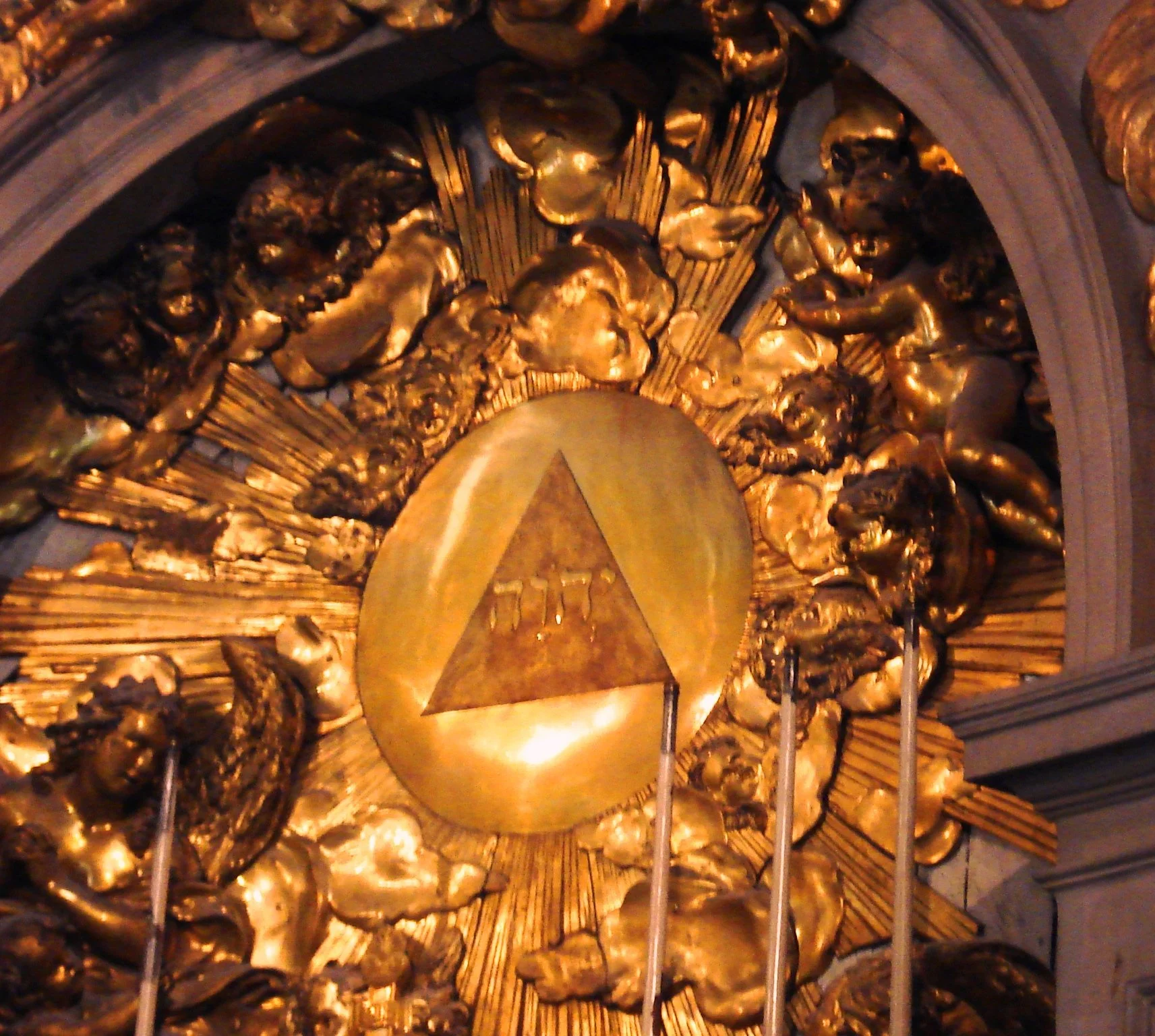
YHWH, also known as the Tetragrammaton, depicted in the Fifth Chapel, Palace of Versailles. Photo: Wikimedia Commons.
If you didn’t already notice from my writing, I’m a liturgy nerd. And that’s why I love this question.
It lets me dig into one of those details that many people may not notice, yet it touches on something very deep: the way we speak God’s name in worship.
Both Presbyterians like me and our Catholic siblings (as well as the Lutherans, Episcopalians, and Methodists) have moved away from using YHWH in prayers and hymns, though we arrived there in different ways.
The Catholic decree
In 2008, the Congregation for Divine Worship at the Vatican issued a directive: the divine name YHWH, sometimes rendered “Yahweh,” was not to be spoken in the liturgy.
Catholics were instructed to use “Lord” or “God,” in keeping with the Greek Septuagint and the Latin Vulgate—the two versions of Scripture the Church had used in early history.
The reasons were twofold.
First, to honor Jewish tradition, which never pronounces the divine name aloud but substitutes Adonai (Lord) or HaShem (The Name).
Second, to preserve Christian continuity, since from the earliest centuries Christians have said Kyrios or Dominus rather than attempting to pronounce YHWH.
That was a formal decree. Catholics received clear instruction by way of the Bishop of Rome, and their liturgy now reflects it across the globe.
The Presbyterian path
We Presbyterians did not issue a decree. Our practice shifted more quietly, but it led us to the same place.
The Bible translations we use in worship—NRSV and now NRSVue—have long followed the Jewish and Christian tradition of translating YHWH as LORD in small caps. So in Scripture readings, we were already saying “Lord,” not “Yahweh.”
Our hymnals tell the rest of the story.
In the 1990 Presbyterian Hymnal, a handful of hymns used “Yahweh.”
But when our denomination produced Glory to God: The Presbyterian Hymnal in 2013, that language was phased out.
The editors made a conscious choice to move toward “Lord,” “God,” and other biblical titles.
It wasn’t announced with fanfare. There was no Vatican-style declaration.
But the effect was the same: in worship, we no longer say YHWH.
Not just us
What is striking is that Presbyterians are not alone in this. The other mainline churches that sprouted from Catholicism—the Episcopalians and Lutherans—have also made this shift.
Their lectionaries and hymnals follow the same pattern of using “Lord” rather than “Yahweh.”
Likewise, Methodists have done the same.
None of these traditions issued formal bans, but all of them moved in the same direction.
Whether through official decree, as with the Catholics, or by organic development in hymnals and Bible translations, as with the original mainline Protestant churches, the result is shared practice.
Why it matters to me
This is not about forbidding a word. It is about reverence and relationship.
Our Jewish siblings have treated the divine name with such awe that they will not speak it.
To casually use YHWH in Christian worship risks ignoring that deep respect.
It is also about theology.
In the New Testament, “Lord” is the word used for both the God of Israel and Jesus Christ.
When we pray or sing “Lord,” we tie ourselves to the earliest Christian confession that Jesus shares fully in God’s identity.
That link is not accidental. It shapes how we worship and how we understand who God is.
Convergence without uniformity
I find it beautiful that Catholics and Presbyterians, along with our Lutheran, Episcopal, and Methodist siblings, converged here, though by different paths.
Catholics decreed it, Presbyterians and the other original mainline Protestants grew into it. The result is a shared practice that honors Jewish tradition, preserves Christian continuity, and keeps our worship language grounded in reverence.
As a Presbyterian elder and a liturgical geek, I see this as one of those subtle but important reminders that worship is never just about words on a page. It is about the history, the theology, and the relationships those words carry.
And in this case, it is about learning not to speak one name, so that when we do call on God as “Lord,” we do so with deeper humility and awe.