Beliefs on death by enslaved Black Americans
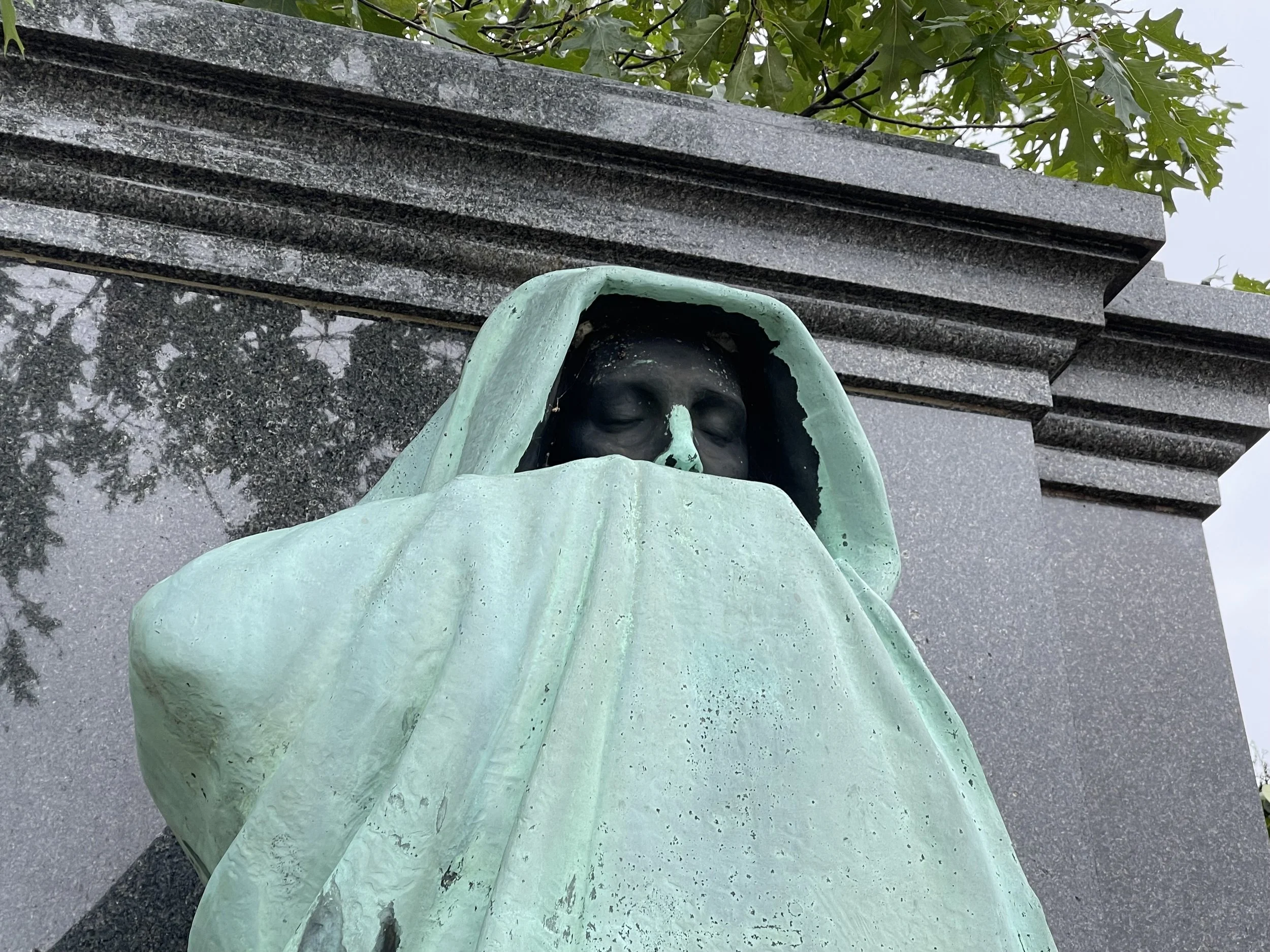
Graceland Cemetery, Chicago, Ill. Photo: Gerald Farinas.
I just finished another wonderful podcast about Sojourner Truth—the third I’ve listened to on my favorite Protestant saint.
Listening to it while passing a Milwaukee-area cemetery, and later the Black Holocaust Museum, I couldn’t help but thinking about death and Blackness.
Among the cruelest legacies of American history is the institution of slavery, a system that not only commodified bodies but also stripped people of their identities, cultures, and spiritual lifelines.
Yet within the brutality of bondage, enslaved Blacks cultivated a powerful spiritual world of resistance, hope, and sacred belief—including distinct views on death and the afterlife.
These beliefs, forged in the crucible of unimaginable suffering, offer lessons for how we might live today with greater courage, community, and clarity of purpose.
Death as liberation
For many enslaved Africans and their descendants in America, death was not simply an end—it was freedom.
This belief was rooted in both West African spiritual traditions and reinterpreted Christian theology.
In a world where justice on Earth seemed perpetually deferred, Heaven or the spirit world became a realm where the chains would be broken and the soul would be reunited with ancestors or with God.
This is powerfully illustrated in the spirituals sung in the fields—songs like “Swing Low, Sweet Chariot,” which voiced hope in being carried “home” by divine forces.
“Home” was more than a location; it was a return to dignity, to belonging, to God.
For some, especially the elderly or those who had lost children to sale or abuse, death was not feared—it was a hoped-for reunion and a holy relief.
Sojourner Truth, born Isabella Baumfree in 1797, lived this belief.
Though she became a prophetic voice for abolition and women’s rights, her early years as a slave were filled with loss—including the trauma of having her children taken from her.
Yet even in later life, Truth would often speak of death with clarity and peace. She once said, “I don’t go to mourn. I go to glorify.”
Her faith was rooted in the belief that death would unite her with a just God who had never forgotten the cries of the enslaved.
The thin veil between the living and the dead
As in my own ethnic Ilocano heritage, enslaved people believed that the dead were still present in spirit—watching, guiding, even intervening.
Not foreign to me but strange to some Americans, ancestors were not merely remembered in Black culture; they were active participants in the ongoing story.
This echoes traditional African cosmologies where the dead are not “gone” but relocated, still part of the community.
Death, then, was less of a rupture than a transition.
This belief gave rise to a sacred respect for burial grounds, which often became secret spaces of grief, ritual, and resistance.
The act of burying a loved one—even with limited means—was a defiant claim of humanity, dignity, and continuity.
Sojourner Truth herself was guided by visions and spiritual visitations.
She reported hearing divine voices and even seeing the face of Jesus. She was not ashamed to say that the spiritual realm was real to her—and it infused both her grief and her joy with meaning.
In her Narrative, she described seeing a vision of heaven filled with angels and light, reinforcing her belief that the dead lived on in God’s presence.
Communal lament and sacred joy
Funerals among the enslaved were often the only moments when unbridled expression was tolerated.
Through wails, songs, and stories, the community claimed the life of the deceased and affirmed their shared hope.
Mourning became both spiritual and political: a way to resist erasure, to affirm that this person mattered.
At the same time, death was often met with celebration—not morbidly, but as a reflection of deep faith.
“They done crossed Jordan,” mourners would say, invoking both biblical imagery and spiritual triumph.
Through these communal rituals, enslaved people practiced a radical form of hope: that death could not conquer the soul, and neither could the slaveholder.
Truth herself often led in spirituals and communal gatherings, using her voice not only to speak truth to power, but to raise the dead in memory.
She reminded listeners in her thick Dutch accent that those who had gone before them—both martyrs and ordinary saints—were not lost. They were companions on the journey, witnesses in the great cloud described in Hebrews 12:1.
Lessons for today
So what can we, living in a modern age that often hides death away and sanitizes grief, learn from the enslaved and from Sojourner Truth?
Death as truth-teller
The enslaved recognized that confronting death could clarify what truly mattered. In their world, where every day was uncertain, death sharpened the longing for freedom, love, justice, and divine presence. In our own lives, an honest reckoning with death might help us live with deeper intention.
Grief as resistance
Today, when society urges us to “move on” quickly from loss, the enslaved remind us that grief is sacred.
Public mourning, storytelling, and song are not just emotional releases—they are ways to affirm that every life is worthy of remembrance.
Sojourner Truth grieved deeply, but she also sang through her sorrows, defying a world that tried to make her forget.
The dead as part of us
In an age of disconnection, remembering our ancestors—biological or spiritual—can anchor us in continuity. We are not alone. We are part of a larger story.
Truth never let her listeners forget the generations who had suffered for their freedom.
“Truth is powerful,” she said, “and it prevails.” Even beyond death.
Faith in the face of suffering
To believe in a better world, either in this life or the next, while being crushed under the weight of oppression, is an act of supreme courage.
The enslaved remind us that faith is not naïve—it is a weapon of the spirit.
Hope can be revolutionary.
Truth’s unwavering belief in divine justice gave her strength to challenge courts, presidents, and white supremacy itself.
Enduring testimonies
The beliefs of enslaved African Americans about death are not relics of the past—they are enduring testimonies to human dignity in the face of dehumanization.
And in Sojourner Truth, we have a towering example of someone who carried these beliefs like a torch into the public square.
In their vision of death as freedom, ancestors as companions, and grief as holy, they teach us how to live: with purpose, connection, and radical hope.