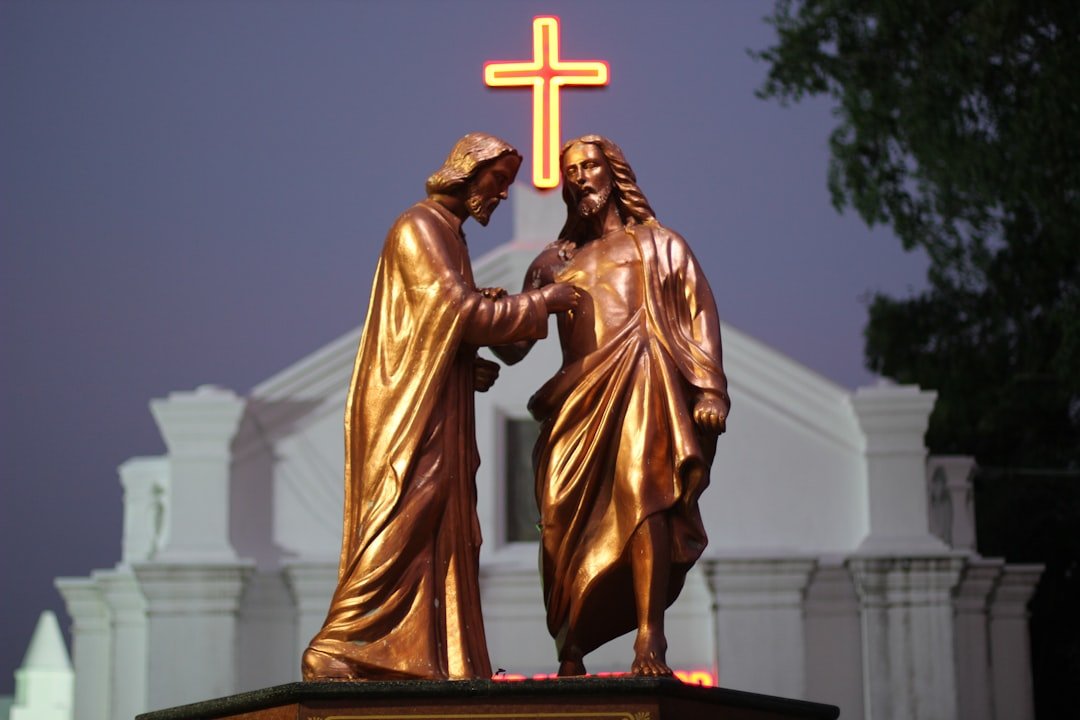
Photo: Paul Yonggicho on Unsplash.
Every year, many churches read the story of “Doubting Thomas” on the Second Sunday of Easter.
In it, the Apostle Thomas refuses to believe in the resurrection of Jesus until he can see and touch the wounds for himself.
He famously declares, “Unless I see… I will not believe” (John 20:25, NRSVUE).
Though often cast as a cautionary figure, Thomas is, in truth, a deeply relatable character for our times—not only in matters of faith, but also in everyday life, especially in our relationship to trust, hope, and institutions.
Today, we live in an age of profound doubt.
We doubt the survival of democratic institutions after years of political turmoil.
We doubt whether common sense and basic civility still have a place in public life.
When someone does something generous or noble, we instinctively wonder what hidden motive must be driving them.
Like Thomas, we demand proof before we dare believe in anything good.
And who could blame us? Corruption, broken promises, and public betrayals have conditioned our hearts to distrust.
But Thomas’s story offers more than a mirror for our skepticism—it offers a path forward.
Jesus does not shame Thomas for his doubt.
Instead, he meets Thomas where he is, offering his wounds as evidence.
Thomas, confronted by that radical vulnerability, responds not with cynicism but with awe, “My Lord and my God!” (John 20:28).
The point is not that doubt is evil; it’s that openness must eventually follow doubt if hope is ever to survive.
In our secular lives, the same holds true.
If we allow our doubts to harden into permanent cynicism, we close ourselves off from the possibility of renewal.
Institutions can be reformed.
Civility can be reborn.
People can, and sometimes do, act with genuine goodness.
Like Thomas, we are invited not to abandon our critical minds, but to remain open to being surprised—to stay tender enough to recognize moments of grace when they appear.
Faith—whether religious or secular—is not about pretending everything is fine.
It’s about daring to believe that healing and resurrection are still possible, even when the wounds of the world are right in front of us.