First Sunday in Lent: The forbidden fruit of AI and information overload
Scripture reading: Genesis 2:15-17;3: 1-7.
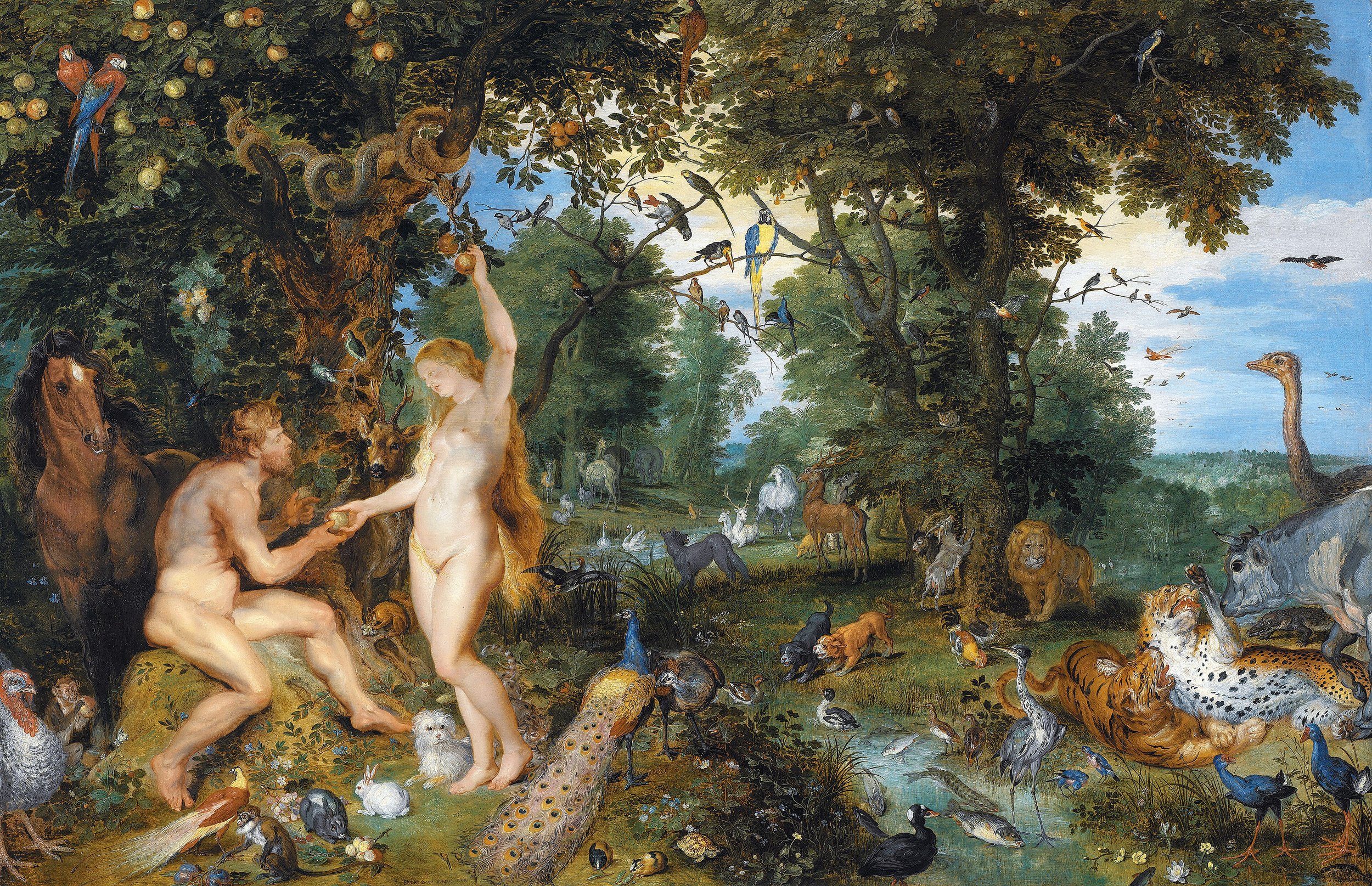
“The Garden of Eden with the Fall of Man.” Mauritshuis, The Hague. Credit: Jan Brueghel the Elder and Peter Paul Rubens.
I was driving to Costco with the radio tuned to WBEZ, listening to an episode of the news quiz show "Wait Wait... Don't Tell Me!" The panelists were joking about the strange ways artificial intelligence and driverless cars might change our future.
They mentioned the possibility of entirely new jobs we have never seen before, like a rideshare car tender. The idea was that even if a car drives itself, we might still need a human being there just to keep things orderly or provide a sense of comfort.
It was a funny segment, but it stuck with me because it highlights our current obsession with what is coming next. We are constantly trying to peer around the corner of tomorrow, using technology to solve problems we have not even created yet.
This desire to know the future and control every variable is exactly why we return to the beginning of the human story every Lent.
Starting the first Sunday in Lent with the story of the garden of Eden, according to the Revised Common Lectionary, is like looking into a mirror. We begin our 40-day journey by returning to the very start of the human story because it helps us understand the brokenness we are all trying to face.
In this reading from Genesis, the Lord God puts the man in the garden to care for it. God gives him almost total freedom except for one specific boundary: the tree of the knowledge of good and evil.
When the serpent enters the scene, he does not just tempt the woman with fruit. He tempts her with the idea that she can be like God on her own terms. We start Lent here because we cannot truly celebrate the restoration found in the Gospel without first admitting why we need it. This text reminds us that the struggle with temptation is as old as the dust from which we were made.
In the world today, we have become like Eve in ways we might not even realize. We live in a digital orchard where every screen is a branch heavy with the fruit of forbidden wisdom. Our version of taking from the tree is not always about seeking evil. Instead, it is about our obsession with having more information.
We have convinced ourselves that knowing everything, whether it is the latest AI breakthrough or the infinite scroll of a news feed, is the same thing as having a full life. We reach for the fruit of data and endless "knowing" because we believe it will give us control. We want to be the masters of our own little universes.
But just as it was in the garden, this reach for control usually leaves us feeling exposed. We find ourselves overwhelmed by a type of wisdom we were never meant to carry alone.
Like the woman in the story, we think that more knowledge will make us wise and secure. Instead, we often find that the more we know, the more anxious we become. We know more about the problems of the world than any generation before us, but we have lost the peace that comes from trusting the Creator.
We are like those driverless cars the radio hosts mocked: moving faster than ever, yet still feeling like we need someone else to take the wheel.
To fight this constant temptation to be all-knowing, we can practice a holy kind of restraint that the Church calls fasting.
In a culture that tells us we deserve to know everything immediately, choosing to step back from the flow of information is an act of faith. It is a way of admitting that we are creatures, not the Creator. Our minds were not built to carry the weight of every global tragedy in real time. We resist the urge to grasp at the tree by choosing to be present in our actual lives rather than lost in the digital cloud.
Eve was pulled away from the goodness of who she already was by a promise of what she could be. We find our way back when we focus on the tangible needs of our neighbors and the simple grace of the Sacraments.
True wisdom is not found in having all the answers or predicting the next tech revolution. It is found in the quiet trust that God is the one who holds the world together.
This Lent, we are invited to stop reaching for the fruit and start reaching for the hand of the one who planted the garden in the first place.