From First Breath to Final Exhale: The lost history of when life begins
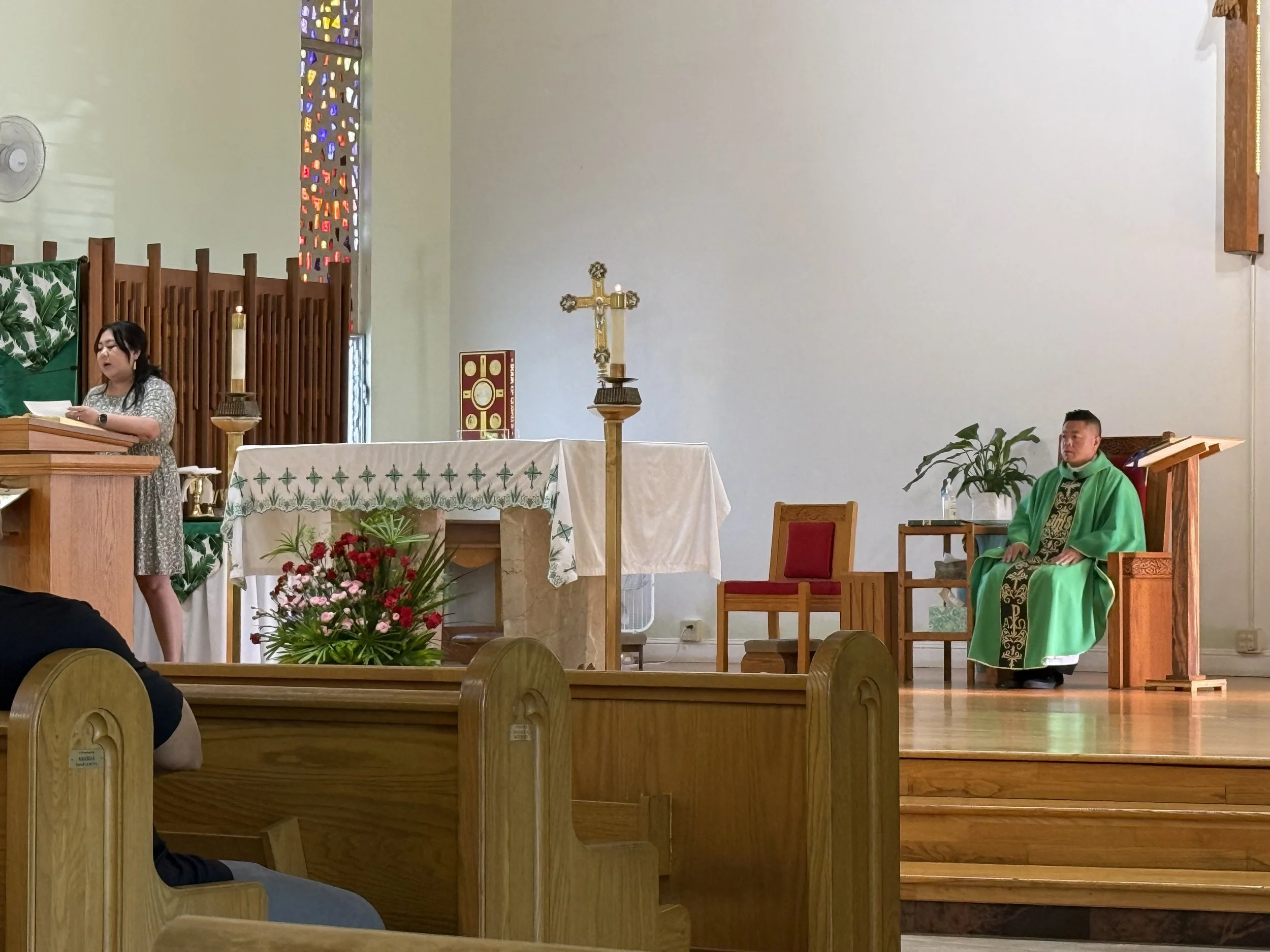
St. Philomena Catholic Church, Honolulu, Hawaii. Photo: Gerald Farinas.
While driving through Salt Lake today, the neighborhood I grew up in from the third grade until I moved to Chicago, I spotted a billboard (a loophole in Hawaii’s billboard ban) proclaiming that life begins at conception and ends with natural death.
The sign champions a dogmatic definition of life that is actually a relatively modern invention formalized by papal decree in 1869.
That leaves a fascinating question: If the Western world did not anchor the definition of life to conception for the vast majority of its history, what did it believe?
Long before the 19th century redrew the boundaries of human existence, Western thought placed life between two clear bookends. Life began not when cells first met, but when an infant drew its first independent breath, and it ended with the final exhaled sigh.
Thinking about how culture and history construct these boundaries feels especially fitting right now as I am reading "Exhumed: Unearthing the History of the American Vampire" by my favorite folklorist Aaron Mahnke, a brilliant dive into how deeply human fears, medical anxieties, and folklore have historically shaped our relationship with life and death.
NOTE: I actually do have a list of favorite folklorists like the late Glen Grant and Lopaka Kapanui. I also highly recommend Aaron Mahnke’s podcasts, “Lore” and “Cabinet of Curiosities,” among others he produces.
It is impossible to observe these modern billboards without feeling a deep sense of grievance. The relentless culture wars over the definition of life have long since moved past theological debate, resulting in aggressive attempts to enforce one specific religious philosophy as public policy, dismantle bodily autonomy, and criminalize healthcare. Tragically, this ideological extremism has not remained theoretical; it has spilled over into real-world violence, resulting in the targeted murders of physicians and nurses who were simply providing essential medical care.
To understand how the ancient Western and Mediterranean worlds defined human life, we have to look back through ancient Judaism and classical Greek philosophy.
In both traditions, life was defined by breath, movement, and the active presence of air moving through a living body. It was not defined by a microscopic spark at the moment of fertilization.
In the Hebrew tradition, physical existence and spiritual life were tied directly to breath. Ancient writers and observers looked at the world with clear realism. An infant inside the womb was seen as part of the mother, sustained entirely by her body, without independent life yet.
Life as a distinct human journey did not begin in the quiet darkness of the womb; it burst into reality with the sharp shock of birth and that first gasp of air.
When the biblical writers described the moment God brought humanity to life, they did not point to the quiet fusion of biological matter. They pointed to an audible, visible act of breathing. God formed humanity from the dust and breathed into its nostrils the breath of life, using the Hebrew word neshamah, and humanity became a living soul.
The Hebrew words for spirit and breath, such as ruach and neshamah, were the exact same words used for the wind and for the air filling a newborn's lungs. To live was to breathe. Without that vital intake of air, there was simply no human life yet.
The ancient Greeks shared this deep intuition, though they approached it through philosophy and early science. Aristotle, whose ideas shaped Western thought for nearly two millennia, did not view the early stages of pregnancy as a fully formed human life with an eternal soul. Instead, he taught that the fetus developed through stages over weeks before receiving a rational human soul later.
To the classical mind, a human being was defined by consciousness and the physical act of breathing. The ancient Greek word for soul, psyche, originally meant breath. Life was an active state sustained by the cosmos, anchored firmly to breathing.
Throughout antiquity, the medical and philosophical agreement was clear: whatever potential a developing fetus held, the actual status of living personhood began when the child entered the open air and drew its first breath.
Just as life began with an inhalation, the Western tradition understood its end through the final exhalation. Death was defined simply by the stopping of breath. When the breath left the body, the chest stopped rising, and life was over.
For centuries, this simple definition, first breath to last breath, guided legal, religious, and philosophical ideas across the West. It was a definition rooted in what people could actually see and hear in nature, rather than abstract microscopic theory. When Pius IX, the bishop of Rome, changed the rules in 1869, he broke a millennia-old tradition that viewed life as a dynamic, breathing relationship with the world.
Seeing that sign in Salt Lake today, I wonder how many people actually know the traditional meaning of life before the one championed by (ironically traditionalist) Roman Catholics and Evangelicals.