Let’s talk about the real Santa Claus
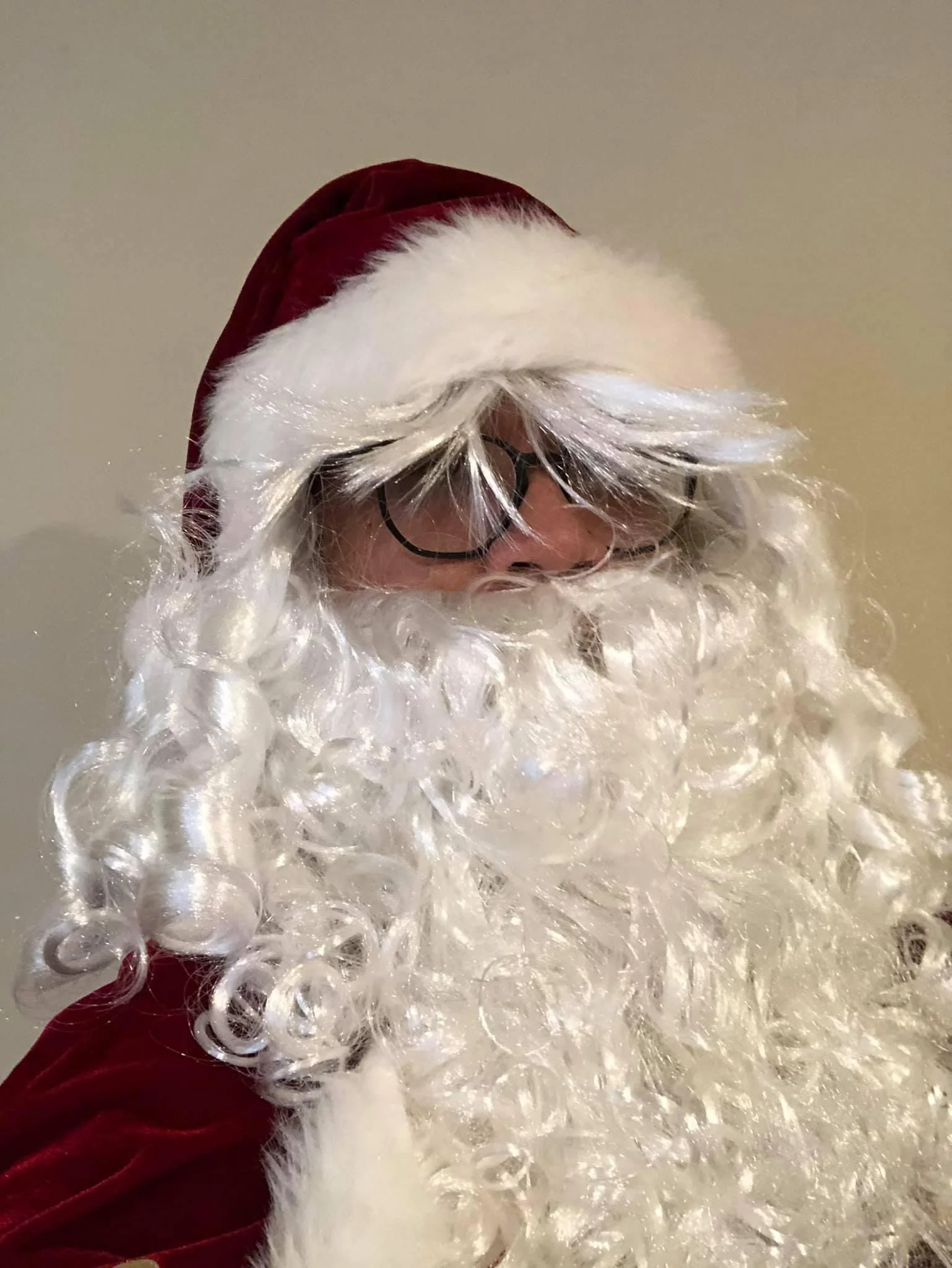
Guess who?! Photo: Gerald Farinas.
For nearly twenty years, I've had the immense privilege of being the answer to the question for countless people here in Chicago: Who is the real Santa Claus?
I’ve sat in the big chair, listened to wishes, and shared quiet moments of magic, not just with children, but with older adults as well.
This year, I’m pulling on the boots and the red suit again for a holiday production and a special toy giveaway.
It gets me thinking. After two decades of embodying the spirit, it’s my turn to ask: Who is the real Santa Claus?
When you first start playing Santa, you think it’s about the costume, the booming "Ho Ho Ho," and the perfect fake beard. You learn very quickly that it’s about something far deeper.
My favorite moments aren't the big, flashing ones; they are the quiet, often profound, connections. There’s the 90 year old man at the skilled nursing facility who just wants to tell you about his late wife. There’s the shy four year old who whispers a request not for a toy, but for a blanket for their little sister.
These moments strip away the commercial tinsel and take you straight back to the historical origin. Saint Nicholas. The 4th century presbyter.
In our Presbyterian tradition, we recognize that Nicholas was one of the early Christian elders of the Church who were addressed as bishop.
He wasn't a celebrity; he was an anonymous force for good. He used his resources to fill a necessary void, often throwing bags of coins through windows or down chimneys to help those in dire need.
The real joy of playing Santa is realizing that you aren't playing a fictional character; you are momentarily serving as a vessel for the true spirit of Saint Nicholas—unconditional, anonymous care.
The great thing about the Santa Claus myth is how easily it adapts. The Dutch brought Sinterklaas to New Amsterdam, which became our modern Santa. The poets and artists gave him his sleigh and his suit. Coca Cola gave him his trademark red style.
But at every step, the central promise has remained the same. There is goodness in the world, and it is quietly working on your behalf.
When a child sits on my knee, I'm not just listening to their list. I'm receiving their trust. When an older adult with dementia smiles and pats my arm, they are remembering a time when life felt simpler, safer, and full of possibility.
The real Santa Claus, the one I’ve been trying to bring to life all these years, is the promise of hope in human form.
I am just one man (a brown Asian Pacific Islander at that) in a costume, but the magic only works because that spirit is everywhere.
The real Santa is not a single person; he is an action taken by many.
He is the person who donates the food handed out each week and the dedicated volunteers who repackage and distribute that food at local pantries and mutual aid organizations.
He is the people who visit the homebound or those imprisoned, bringing connection and light to those often forgotten.
He is the people who courageously help our local immigrants, especially those frightened or even traumatized by ICE and CBP raids. This includes the volunteers who quietly watch school grounds, ready to intervene if federal agents execute a raid, and the people with whistles ready to blow the codes of warning when ICE and CBP vehicles approach.
He is everyone who performs little things and big things, not wanting to be known, but simply wanting to help.
The genius of the legend is that it decentralizes the power of giving. It allows all of us to put on the red suit, metaphorically speaking, and practice true, selfless kindness.
So, when I step out onto that stage and into that toy giveaway this year, I won't just be playing Santa. I’ll be joining a long, beautiful tradition of people choosing to embody goodness.
And if you’ve ever chosen to give anonymously, volunteer, or simply perform an unexpected act of kindness, then I can tell you with absolute certainty who the real Santa Claus is.
You are the real Santa Claus.