Dispatches from GA227: Marching to end gun violence
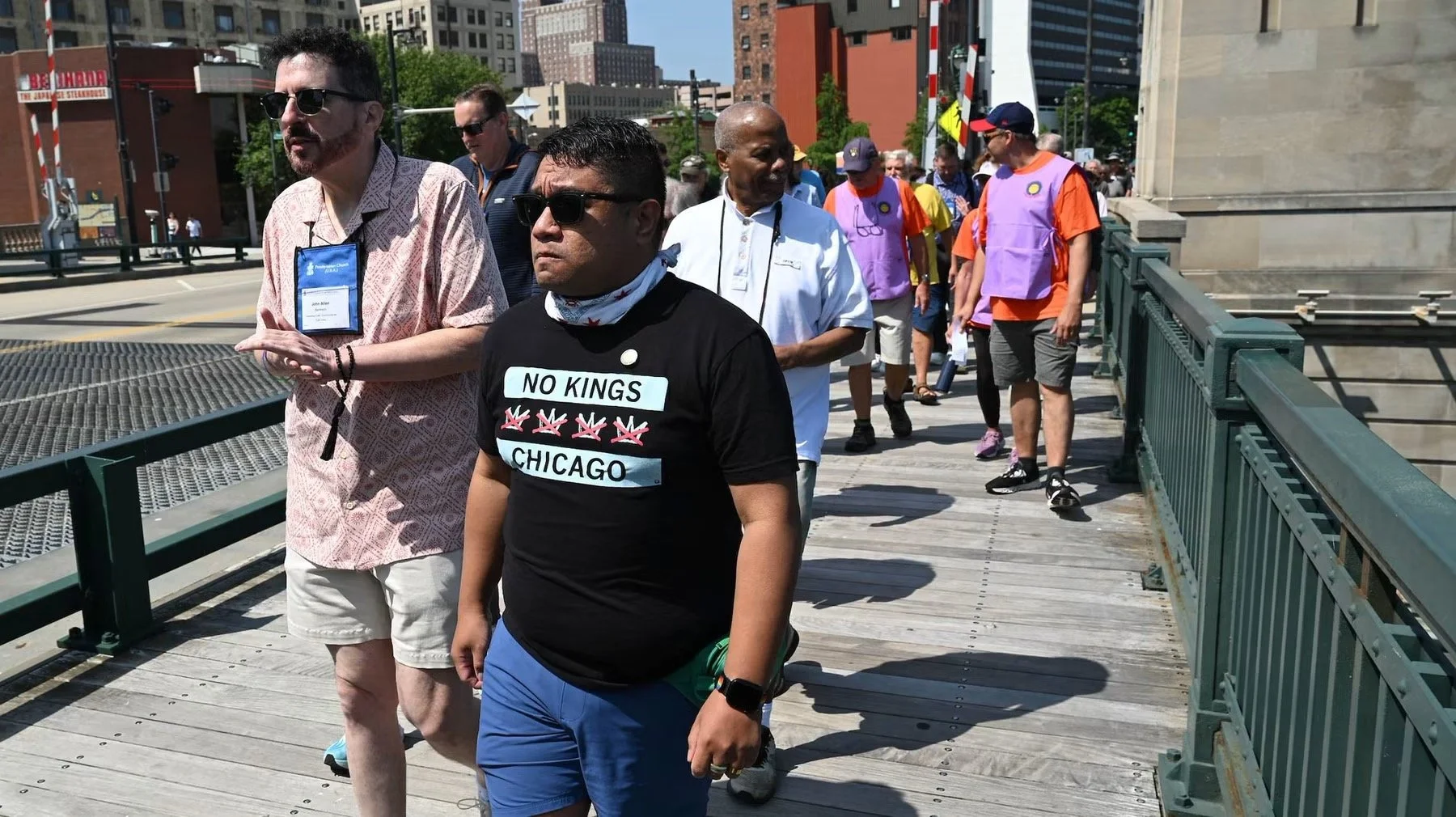
Photo: Presbyterian Church (U.S.A.) official event photograph.
The morning sun over the Milwaukee lakefront brought plenty of light but not much warmth. There was a distinct chill in the air as we gathered at Pere Marquette Park for the first-ever Community Day of the General Assembly. This new initiative was designed to turn our focus outward, right toward the immediate needs and painful realities of our host city. Our goal was clear: a public march and witness to end gun violence under the banner of "Healing Not Harm."
For me, being here in Milwaukee brings up some heavy personal memories. This city holds a sore spot in my heart because of its struggles with domestic violence, which serves as a major, painful adjacent issue to the gun crisis we were marching against.
Back in February 2020, I served as the spokesman for a family that went through an unimaginable tragedy here. A young mother named Amarah Banks, who was just 26 years old, was found dead in a garage alongside her two young daughters, four-year-old Camaria and five-year-old Zaniya. The family had also lost a newborn baby just a little earlier.
While that specific heartbreak did not involve a firearm, the horror of their deaths sparked massive outrage, turning a harsh spotlight on the broader epidemic of domestic violence that plagues both Milwaukee and communities across the country.
WATCH: Banks murder case
That same shared sense of grief and determination brought together commissioners, advisory delegates, and local activists in the park. Among the speakers was Frank Cimorelli, a retired Major League Baseball player. He did not talk about sports. Instead, he shared the painful reality of losing his son, Cam, to suicide after a severe mental health crisis.
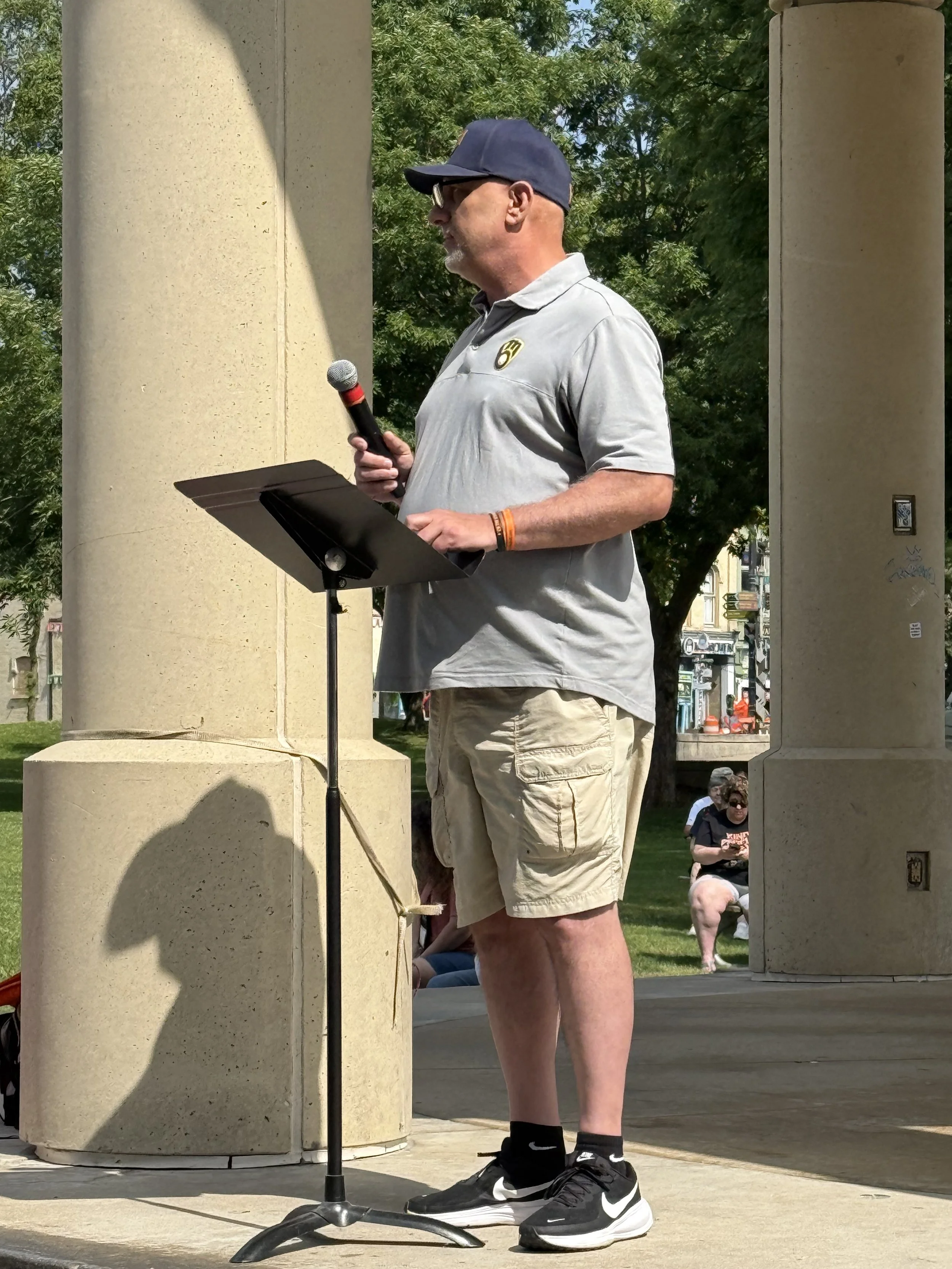
Frank Cimorelli. Photo: Gerald Farinas.
Frank detailed the agonizing progression of Cam’s illness, describing how his psychotic episodes happened with increasing frequency. During one devastating crisis, Cam shot himself in the face. The blast destroyed his teeth and jaw, yet he survived. The story got even tougher to hear as Frank described the systemic failures that followed. The emergency response simply was not up to the task. Cam actually had to walk himself to the ambulance while the single police officer on the scene focused on checking the house for weapons, leaving the severely injured young man largely ignored in those vital first minutes.
Even after days of inpatient intensive care, and despite a mountain of clear warning signs, Cam was discharged and sent home. The system completely failed to protect him. He tried again and succeeded. Throughout the entire ordeal, Cam was legally allowed to buy rifles and shotguns. Because of gaps in current laws, he bypassed the type of background checks that would have flagged him as too mentally unstable to own firearms. Frank spoke with deep frustration about how our nation values Second Amendment rights so much that it leaves us with almost no meaningful regulations to keep weapons out of the hands of people in deep distress.
Other local leaders filled the park with their own urgent calls to action. Deborah Gillespie of Mothers Against Gun Violence emphasized that grassroots groups cannot carry this heavy weight alone. She offered a direct challenge to everyone listening: communities need the active, sustained help of the Church to advocate in city councils, state legislatures, and the halls of Congress for meaningful gun safety laws.
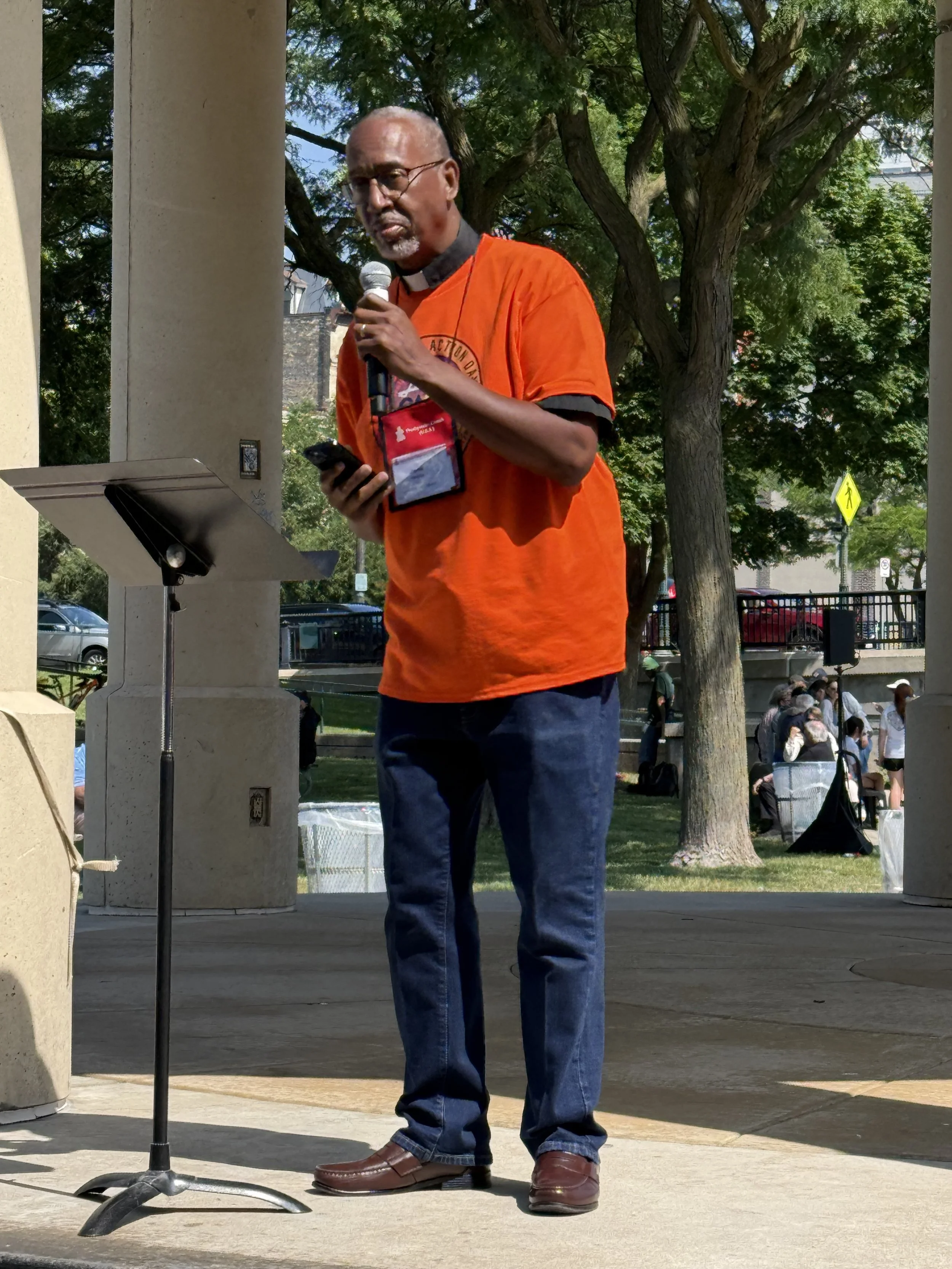
The Rev. Jimmie Hawkins. Photo: Gerald Farinas.
Adding numbers to the narrative, the Reverend Jimmie Hawkins and staff from the Office of Public Witness shared some stark data about gun deaths in the United States. One statistic was a jarring revelation to many in the crowd: firearms are now the leading cause of death for pregnant women in this country. Hearing that fact immediately connected back to the memory of Amarah Banks and the overarching threat of domestic abuse, showing just how deeply intertwined gun violence is with relationship violence and systemic vulnerability.
Inevitably, an event like this draws pushback. Even within our own denomination, groups like Presbyterians for the Kingdom argue that a march like this amounts to inappropriate politicking on civil matters. Critics contend that the Church should focus strictly on spiritual salvation and individual hearts rather than taking public stances on legislative debates like gun ownership.
But when we look at the brokenness shared by families in that park, it becomes clear that public advocacy is not a distraction from our faith, it is an essential expression of it. Our theology does not separate the spiritual from the physical. If the Church confesses that every human life is a sacred creation, then protecting those lives from preventable violence is a deeply spiritual obligation. Speaking out in the public square is not about partisan politicking. It is about answering a Gospel call to stand with the vulnerable, seek justice, and confront the systemic failures that allow tragedies to keep happening.
The question that naturally follows an event like this is simple: what can we actually do when we return to our own communities?
First, we have to keep the fire burning under our elected officials. True change will not happen if we only speak up after a tragedy or during a church convention. We must consistently pressure city council members, state legislators, and members of Congress, demanding common-sense gun safety laws that close dangerous legal loopholes.
Second, we need to educate ourselves and others by constantly sharing the stark realities of this public health crisis. The numbers speak for themselves, and we cannot afford to look away from them. For instance, researchers have found that women in the United States are more likely to be murdered during pregnancy or soon after childbirth than to die from the three leading obstetric causes of maternal mortality combined, according to a study published in the journal BMJ. Furthermore, an expansive national database analysis presented at the Society for Maternal-Fetal Medicine annual meeting showed that out of more than 20,400 maternal deaths over an 18-year period, 11% were due to homicide and suicide, with firearms being involved in 55% of those violent deaths. When we share these specific facts, we help people realize that gun violence and domestic abuse are not separate problems, they are deeply connected.
Finally, we need to study and replicate successful crisis models. Right here in Milwaukee, organizations like the Sojourner Family Peace Center provide a beautiful roadmap for holistic care. They house domestic violence prevention, legal advocacy, mental health support, and shelter resources all under one roof to protect vulnerable families before situations turn fatal. By learning how these local organizations operate, we can advocate for and build similar networks of safety and intervention in our own home communities.
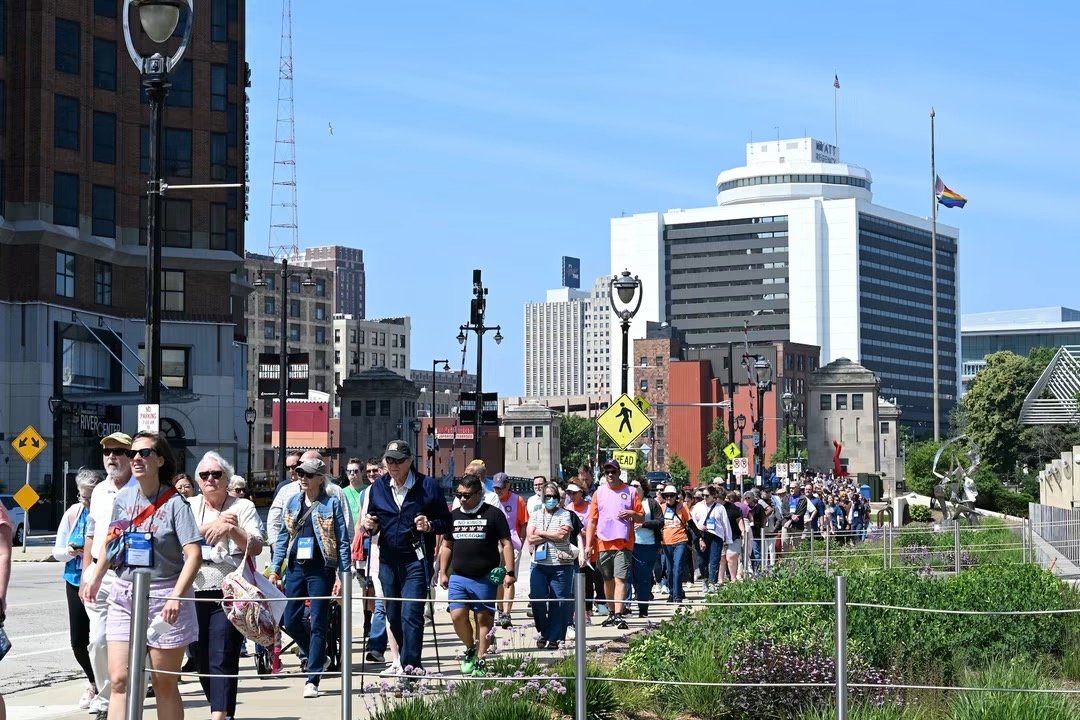
Photo: Presbyterian Church (U.S.A.) official event photograph.
After the speeches concluded, we transitioned from listening to moving. We marched from the park toward Milwaukee City Hall. When we arrived, hundreds of participants joined hands, forming a continuous circle of prayer all the way around the building.
Looking around the neighborhood, the geography of civil authority was striking. The federal building and the county courthouse were both within easy walking distance, and we could have marched there instead. But holding the circle at City Hall felt uniquely poignant. It brought our prayers and demands for safety right to the most local source of government power, exactly where the daily reality of urban violence is felt most acutely. For the PC(USA), the walk was more than just a scheduled event on a convention agenda. It was a tangible reminder that the work of the Gospel cannot be confined to the safety of a meeting hall.
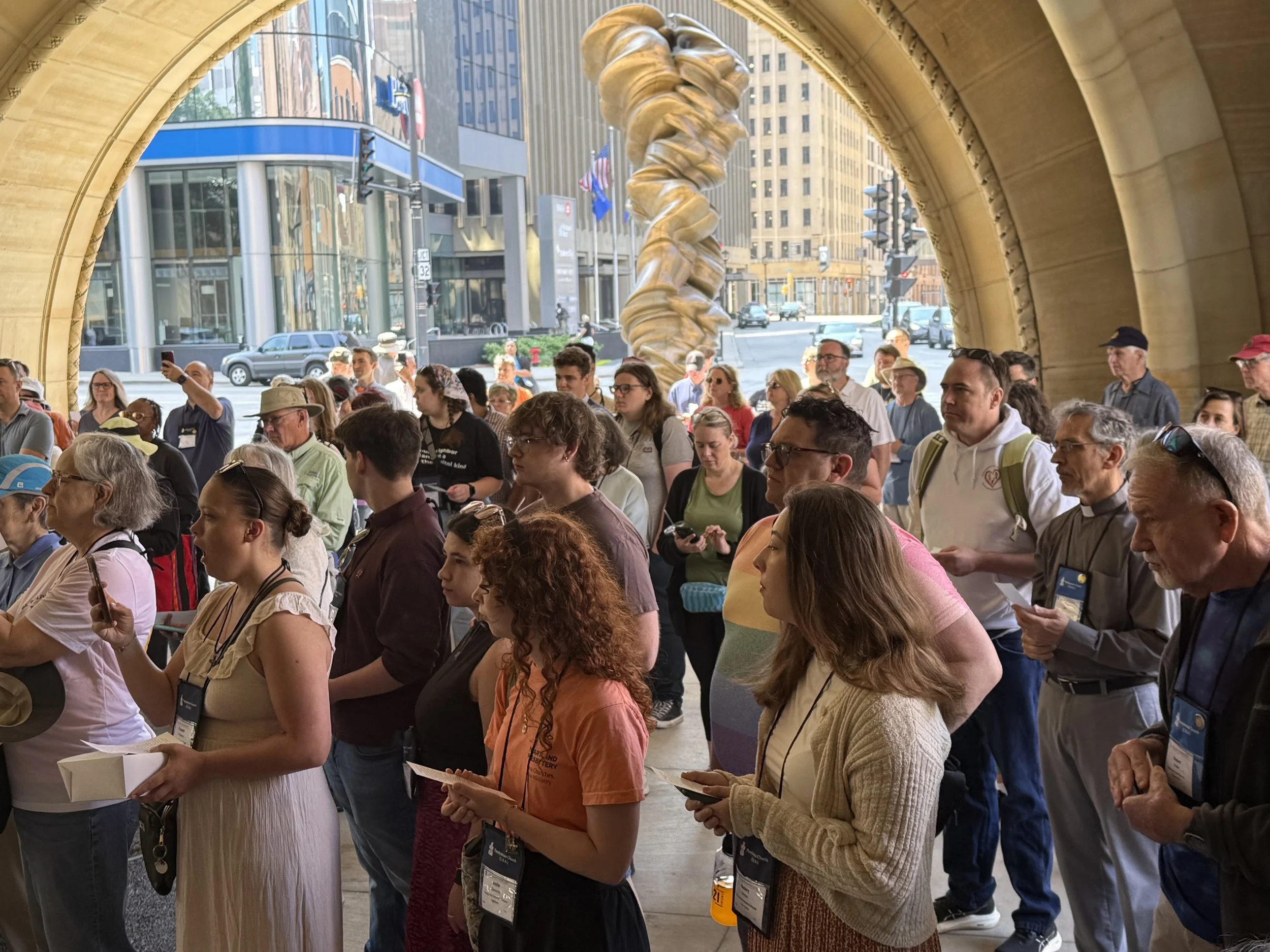
Photo: Gerald Farinas.