Scripture Readings: Isaiah 9:1-4 and Matthew 4:12-23
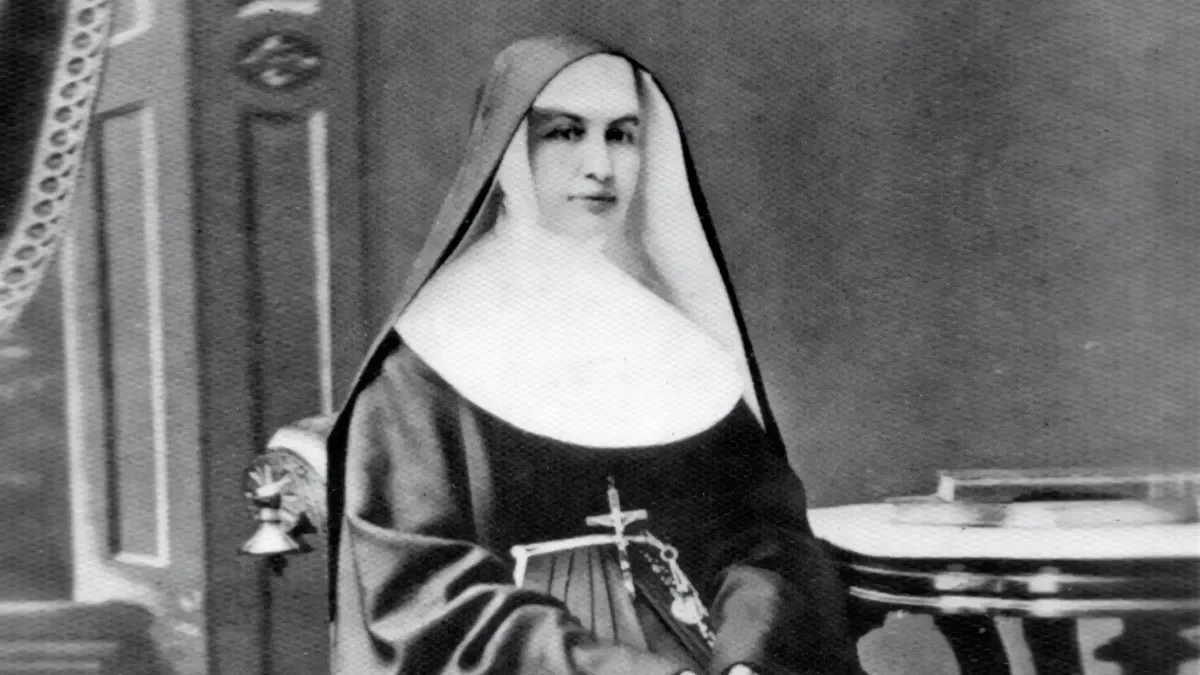
Mother Marianne Cope served the patients, including Presbyterian patients, of a leper colony in the Hawaiian kingdom. Photo: Roman Catholic Diocese of Honolulu.
In the wake of a tragedy that feels like a heavy shroud over the Twin Cities, we turn to the ancient words of the prophet Isaiah and the Gospel of Matthew. These texts do not ignore the reality of a world that feels broken; instead, they meet us exactly where we are: in a land of deep darkness.
The context of Isaiah’s writing was a time of military occupation and profound political anxiety. The regions of Zebulun and Naphtali, mentioned in both readings, were the first to be invaded and conquered by the Assyrian Empire. To be in those lands was to live under the constant shadow of state-sanctioned violence and the fear that your life or the lives of your neighbors could be extinguished at any moment by those in power.
When Matthew picks up this thread, he is writing to a community that knew this same fear under Roman rule. He points to Jesus’ arrival in Galilee as the fulfillment of a promise that the darkness will not have the final word. But today, even here in the Edgewater neighborhood of Chicago, that promise can feel difficult to grasp.
Alex Jeffrey Pretti was a person dedicated to the preservation of life. As an ICU nurse, he stood on the front lines of human fragility, offering care to those at their lowest points. The irony and the agony of his death—being gunned down by agents in Minneapolis—creates a specific kind of spiritual whiplash. It comes just weeks after the community began reeling from the death of Renee Nicole Good. When one tragedy follows another so quickly, the result is not just sadness; it is a profound sense of hopelessness and a righteous anger that cries out for justice.
We find ourselves in a season of deep darkness. This isn't just a poetic metaphor; it is the anxiety of seeing agents of the state bring violence into a neighborhood. It is the despair of losing a caregiver to the very violence he spent his career trying to heal. It is the exhaustion of wondering who will be next.
The Gospel tells us that Jesus began his ministry by echoing Isaiah’s hope, but he did so after hearing that John the Baptist had been arrested. Jesus did not start his work in a time of peace; he started it in a time of political persecution and grief. When he called the fishers by the sea, he was calling them out of a system of economic and physical oppression and into a new way of being the Church.
However, we must be honest about the limitations of the pulpit in moments like these. Sometimes, we preachers can only tell people to have hope and courage. We stand before you and recite the promises of old, but we recognize that sometimes, no matter how many times we say it, you will not feel it. The light mentioned in Isaiah may feel distant, like a star light-years away while you are standing in the middle of a freezing night.
Barbara Brown Taylor once wrote about the luminous darkness, suggesting that there are things we can only learn in the dark that we can never learn in the light. She tells a story of standing in a pitch-black cave, where the initial instinct is to panic, to strike a match, to find any way out. But she notes that if you stay still long enough, your eyes begin to adjust to what she calls the inner light of the world. She reminds us that God does some of God's best work in the dark—in the darkness of the womb, in the darkness of the tomb, and in the darkness of the night.
The reality is that these feelings—the anger, the anxiety, the crushing weight of despair—sit there and exist. They are not sins to be prayed away or obstacles to be overcome by a stronger faith. They are the honest response of the human heart to the loss of a 37-year-old man who lived to help others. There is a specific kind of holiness in simply acknowledging that the pain is present and that it is heavy. Like Taylor’s cave, we are in a place where we cannot see our way out, and the preacher’s call to have hope can feel like a match that won't strike.
In this struggle, we might look to those who chose to make their home in the shadows of society. We remember Mother Marianne Cope of Molokai, a Catholic nun who left the security of New York to serve those exiled to the Kalaupapa Peninsula in the Kingdom of Hawaii—including Presbyterian patients. We have to try to imagine the specific, hollow despair of those she went to serve—the moment a person realized they had leprosy and were immediately stripped of their citizenship, their family, and their humanity. They were loaded onto boats and dropped at the base of towering cliffs, exiled to a secluded island to fend for themselves in what was essentially a living graveyard. It was a place where the state had decided your life was no longer worth protecting, only containing.
Like an ICU nurse today, Mother Marianne became one, walked into a place defined by suffering and state-mandated isolation. She didn't go there with easy answers or a way to cure the incurable at the time; she went there to ensure that even in a land of deep darkness, people were seen, cared for, and treated with dignity. She understood that when the system abandons or targets a group of people, the Church’s place is right beside them in the dark, standing firm even when the light is hard to find.
To be the Church in Chicago today means sitting with the anger and the sadness without trying to fix it with easy platitudes. It means acknowledging that the yoke of the burden and the bar across the shoulders of this community are heavy. The great light Isaiah speaks of is not a light that erases the past, but a light that exposes the truth and guides our feet toward a path of peace and systemic change.
As we remember Alex and Renee, we are reminded that the ministry of Jesus—teaching, proclaiming the good news, and curing every disease—is a direct opposition to the forces of death. We honor Alex’s legacy by continuing the work of care, by refusing to become numb to the violence, and by leaning on one another when the darkness feels too thick to navigate alone.