When churches use New Testament Letters as a weapon of control
Note: This article is licensed for redistribution by anyone under a Creative Commons License type CC BY-ND 4.0. You must attribute the article to Gerald Farinas, Edgewater Presbyterian Church, Chicago, Ill. Some rights reserved. Please email us where you are republishing this article.
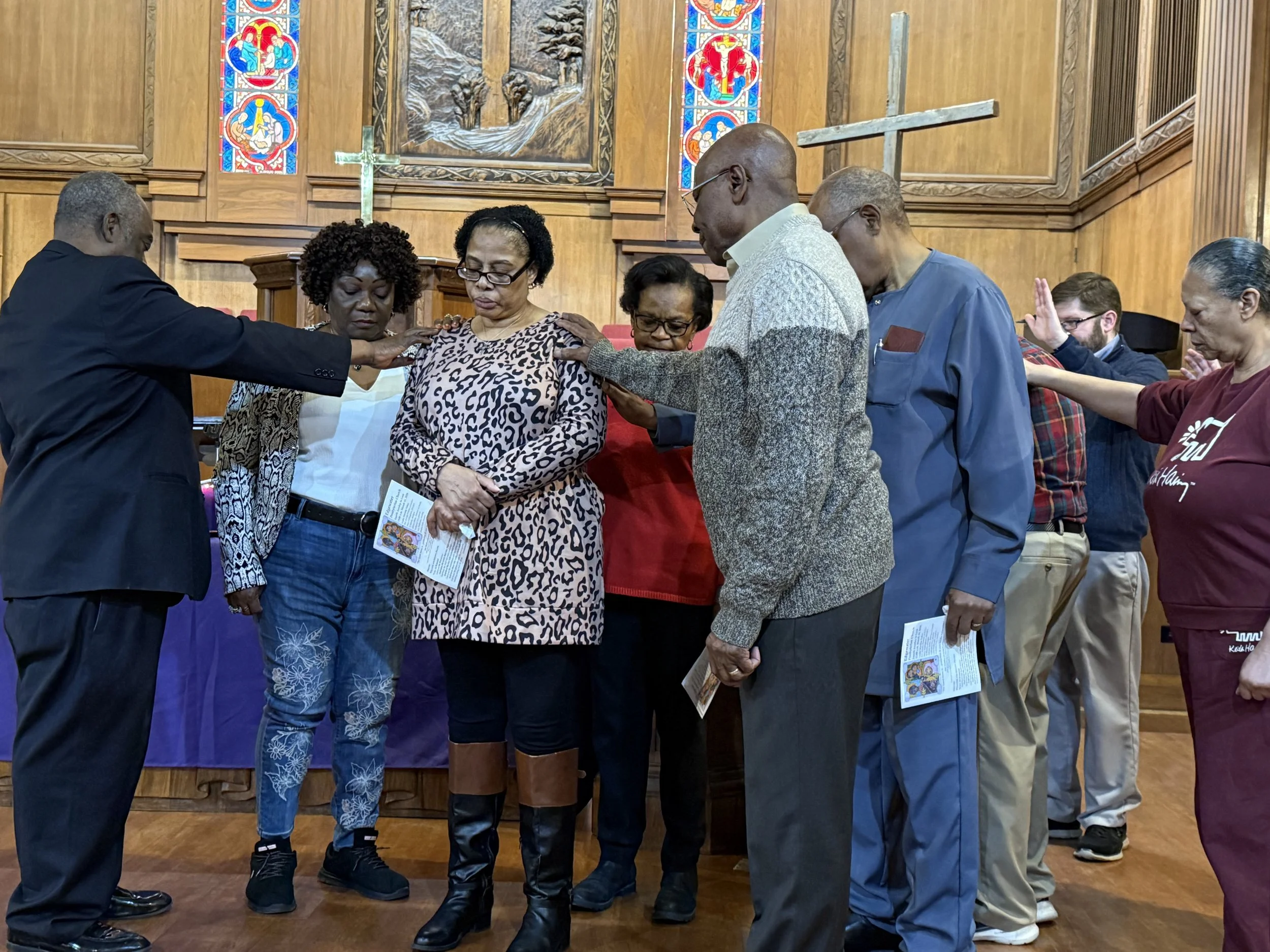
The Eld. Jessica Beasley is ordained to the office and ministry of ruling elder. Photo: Gerald Farinas.
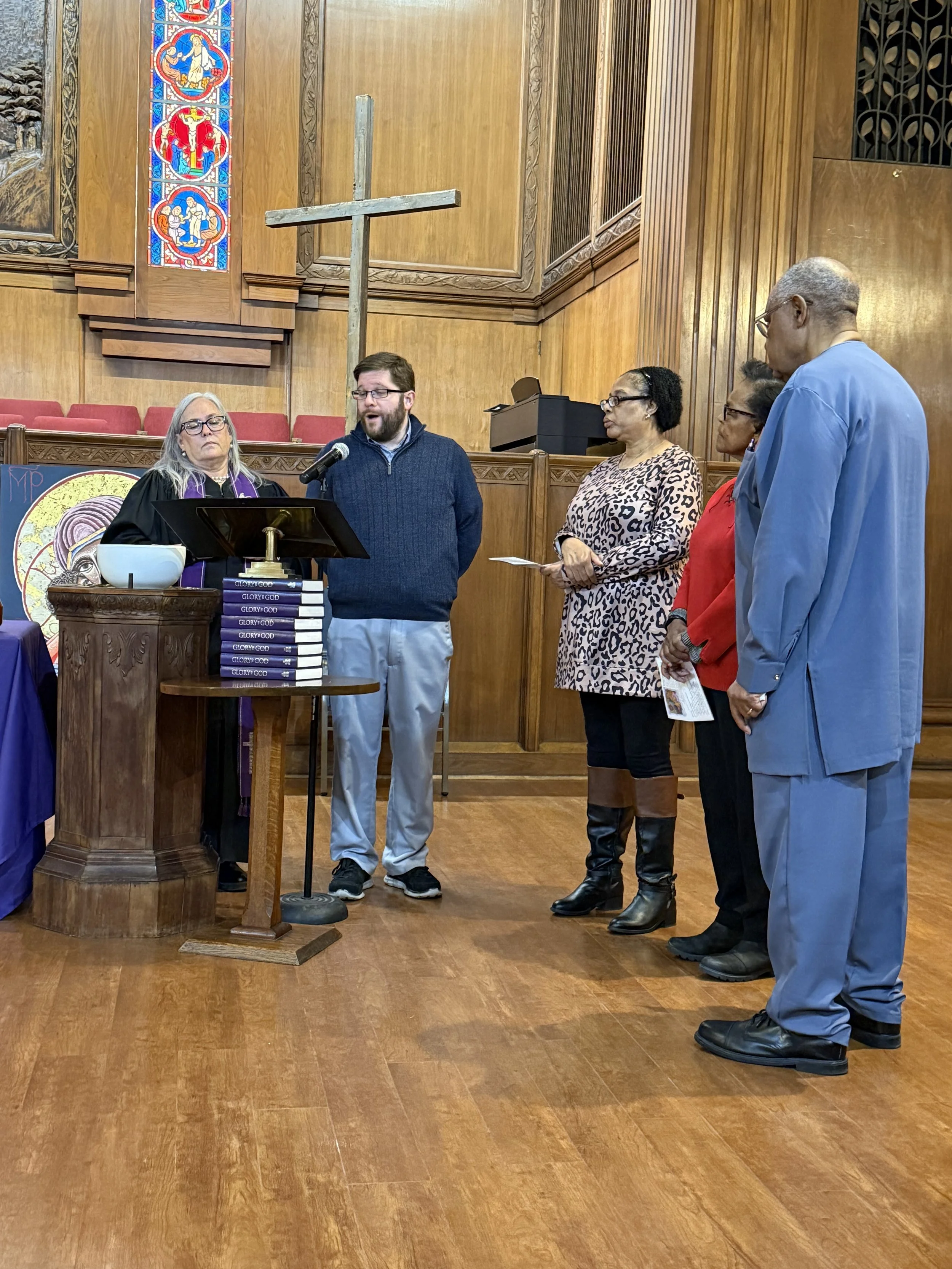
The Rev. Kristin Hutson and Eld. T.J. Martin installed Elds. Jessica Beasley, Kathy Anderson, and Chuma Ezeokoli as ruling elders. Photo: Gerald Farinas.
It happened again. I listened to someone use the Bible to argue why a woman should not be a pastor or elder of the Church. All I could do was shake my head and want to throw the iPad mini I was using to watch the interview against the wall.
One of my favorite beginners’ theology text is by Justo L. Gonzalez called “The Story of Christianity.” In Volume 1, he points out that those earliest New Testament writers were not trying to write a complete rulebook for every part of life.
Instead, their letters were responses to specific problems in specific places. These writings, mostly attributed to the Apostle Paul, were never meant to be a final set of laws for all time. This historical fact creates a major conflict when people today try to use the Letters of the New Testament as a rigid set of laws to control how Christians live or to shape public policy for everyone else.
When these ancient letters are turned into tools for social control, the original purpose of the Gospel is often lost under a desire for power.
The New Testament Letters were written to small groups of people trying to survive and follow Christ while living under the Roman Empire. The authors wrote about immediate issues like how to get along with neighbors, how to stay faithful during hard times, and how to organize the early Church.
Treating these letters as a permanent legal code for the modern world ignores that they were meant for specific moments in time. When people cherry-pick verses to tell others how to live, they often skip over the main message of grace and freedom found in the life of Jesus.
This makes the Bible feel like a weapon instead of a source of life.
A clear example of this problem is found in the history of slavery. For centuries, people used specific verses from the New Testament Letters that told enslaved people to obey their masters to justify a brutal and sinful system.
They took pastoral advice meant for a first-century context and turned it into a permanent endorsement of human bondage. By focusing on those specific words, they ignored the broader Gospel message that all people are equal in Christ. This shows the danger of taking a single piece of ancient writing and using it to deny the basic rights and dignity of others.
In a similar way, some Evangelical or fringe churches that call themselves “nondenominational” use the New Testament Letters to subdue and limit the lives of women. These groups often take specific verses about women remaining quiet or being submissive to their husbands and turn them into universal rules for all women today.
By focusing on these narrow instructions, these churches often prevent women from leading, teaching, or having an equal voice in their own families and faith communities.
And guess what? We used the same lines from these Pauline Letters to prevent women from becoming pastors and elders in our own Presbyterian denomination at one time!
This practice ignores the many times Paul also praised women as coworkers, deacons, and leaders in the early Church. It turns a historical moment of cultural adjustment into a permanent tool for keeping women in a lower social position, which contradicts the Gospel promise of new life for everyone.
Using these historical instructions to make laws for people who are not Christian is another major leap. In a world with many different beliefs, trying to turn the private advice given to a tiny religious minority 2,000 years ago into modern government policy creates a wall between the Church and the public.
The mission of the Presbyterian Church (USA) and the Church at large is hurt when the language of faith is replaced by the language of force. This approach often harms the LGBTQ community and other groups who find themselves targeted by laws based on a narrow reading of the Epistles.
Being faithful to the New Testament does not mean enforcing every cultural rule found in the Letters. It means understanding the Spirit behind those words. If the apostolic fathers wrote to help people love one another in their own time, then the modern Church should focus on how the Gospel calls for justice and kindness today.
Moving away from a focus on control allows for a faith that is more welcoming and reflects the wide love of God. When we recognize that these texts have limits, we can stop using the Bible to shut people out and start using it to invite everyone into a more free way of living.
Earlier today, we ordained Eld. Jessica Beasley to the office of presbyter and installed her alongside Elds. Kathy Anderson and Chuma Ezeokoli to new terms on the Session—the Board of Governors of our church. In the moment the Rev. Kristin Hutson and my fellow elders laid their hands on Jessica, we said no to those who still use the New Testament Letters as a weapon of the Church today. And we will continue to say no as we do the work of God.