Ask the Elder: Why do we say Jesus ‘rose again’ in the creeds?
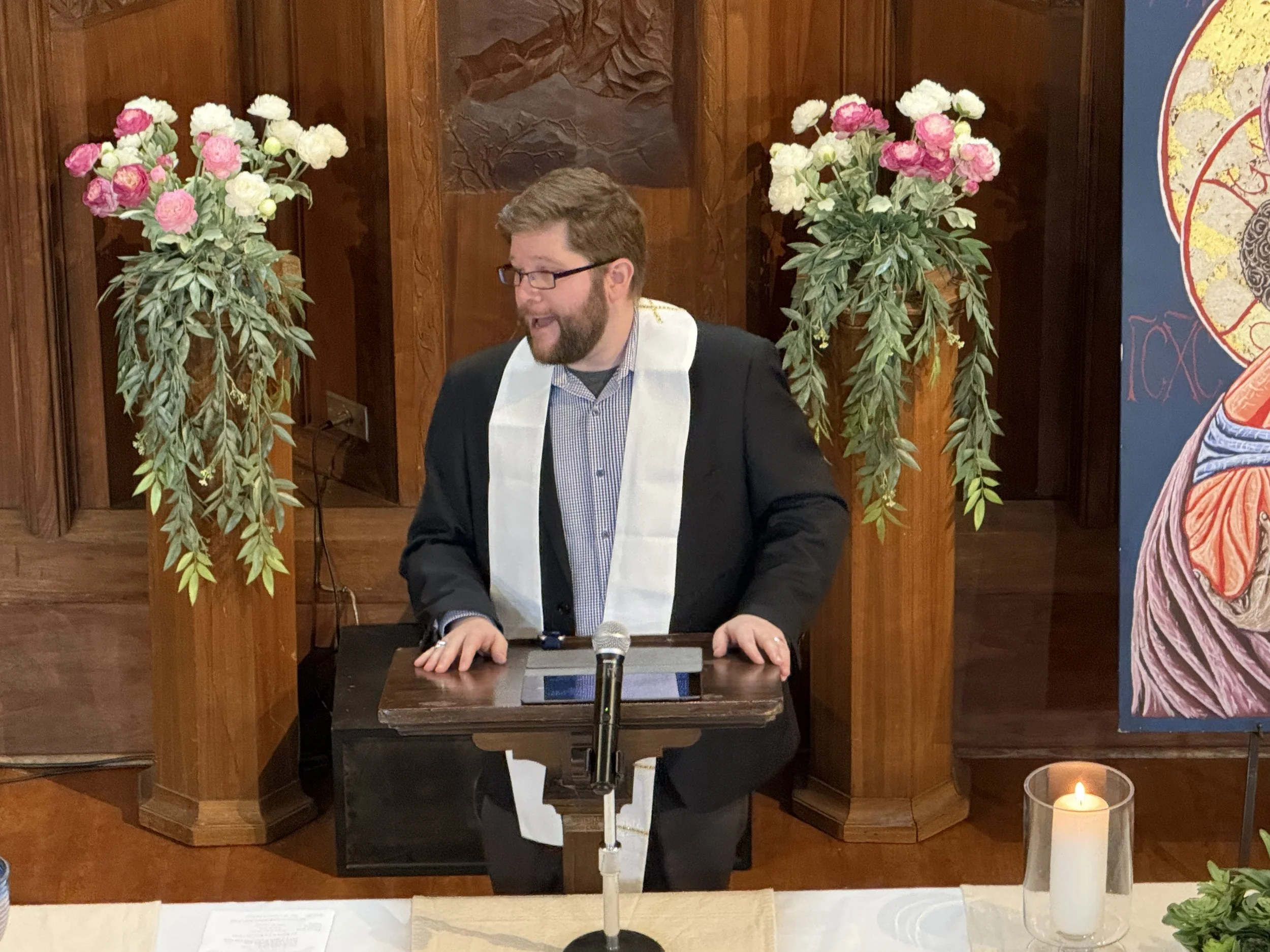
Eld. T.J. Martin proclaims the Word and preaches the message. Photo: Gerald Farinas.
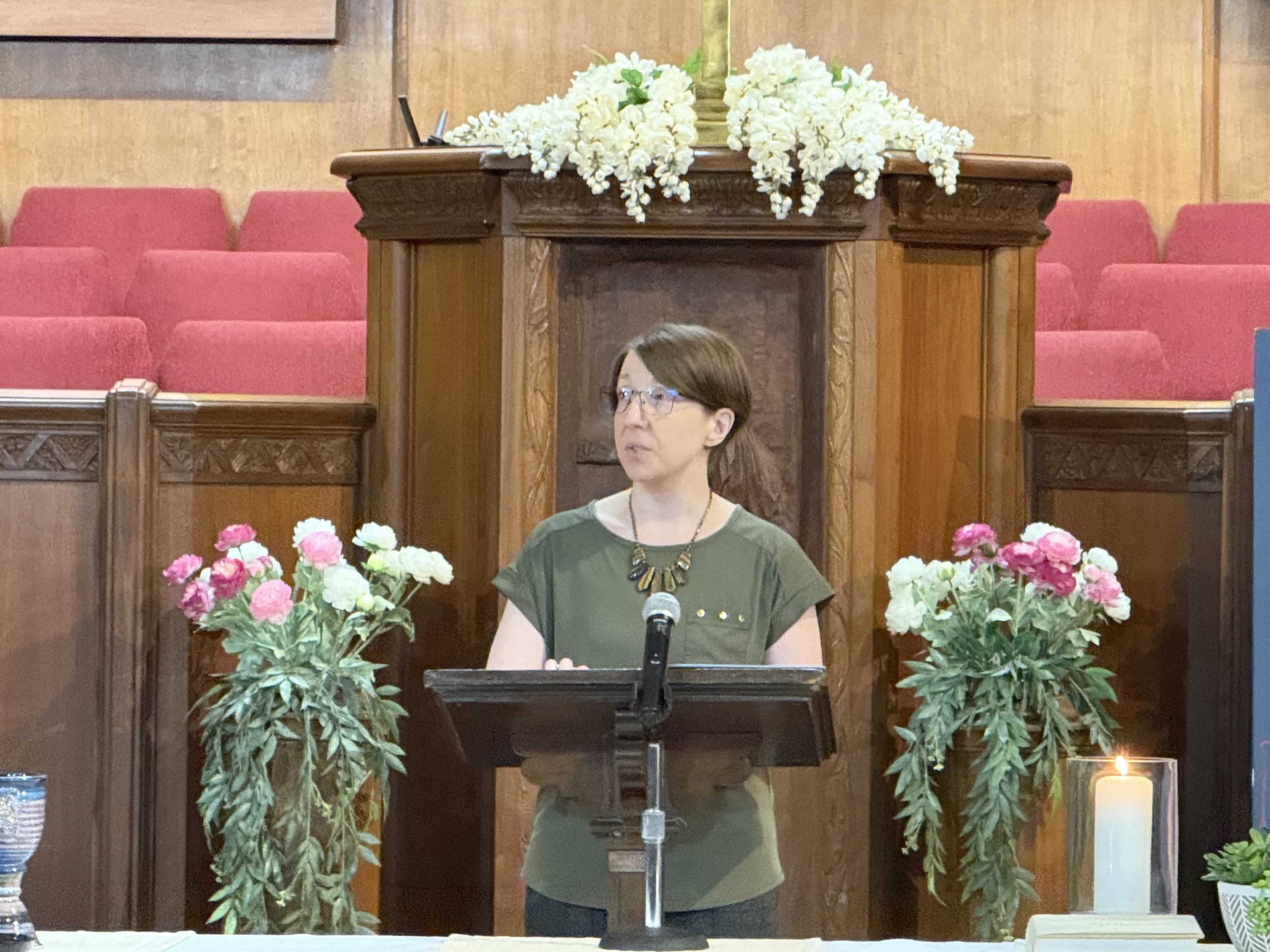
Liturgist Chris Radmacher leads worship. Photo: Gerald Farinas.
Before Chris Radmacher led worship and Eld. T.J. Martin preached today (Reverend Kristin Hutson is on assignment with Presbyterian Disaster Assistance) a pair of friends from Bryn Mawr Care were talking about the Apostle’s and Nicene creeds.
And they had a question in mind.
"Why do they say Jesus rose again?" they asked. "When did he rise the first time?"
When we hear the word "again" in modern English, we usually assume it means a repeat performance, like watching the Melania movie for a second time or going back to the Jewels because you forgot the milk to go with the Oreos. But when we say it in church or recite the creeds, we aren't saying that Jesus rose twice.
The reason we use the word "again" is actually because of how people spoke hundreds of years ago. When the early English translations of the Bible and the Church creeds were written, the word "again" was used differently than it is today.
Back then, "again" often meant "back" or "anew." So, when the Creed says Jesus "rose again," it simply means he "rose back" to life. It was a way of saying he returned from the state of death to the state of being alive.
In the Gospels, the Resurrection is a unique, one-time event. Jesus died once on the cross, and on the third day, he rose. There was no "first" resurrection before that.
When we look at the original Greek language of the Bible, the word for resurrection is anastasis, which literally means "standing up." Think of it like someone who has fallen down and stands back up. They aren't standing up for a second time in a row; they are simply returning to a standing position.
Because language changes, we aren't always tied to these older translations. In our Presbyterian tradition, we are actually allowed to use other, creative, and newer forms of the Affirmation of Faith written by different liturgical writers. Pastor Kristin has often used Affirmations from various authors to help us see our faith through a fresh lens. I have even written versions of my own in the past.
Just a note: When I write these, I make sure I stay in keeping with Reformed theology. Partly so they accurately reflect our beliefs, and partly so I don’t get put on trial by the Church!
These diverse ways of declaring what we believe allow us to use language that speaks clearly to us today.
You might notice that in some other, newer hymnals or newer translations of the Bible, the word "again" is often removed. Many people now simply say, "On the third day he rose from the dead." Both ways of saying it are correct. Whether we use the old-fashioned "again," the modern phrasing, or a creative new Affirmation, the message remains the same: death did not have the final word.
So, the next time you say the creeds and hit that word "again," you can think of it as a celebration of a return. Jesus didn't just go away; he came back to us. That is the heart of the Gospel we share here in Edgewater and throughout the whole Church.