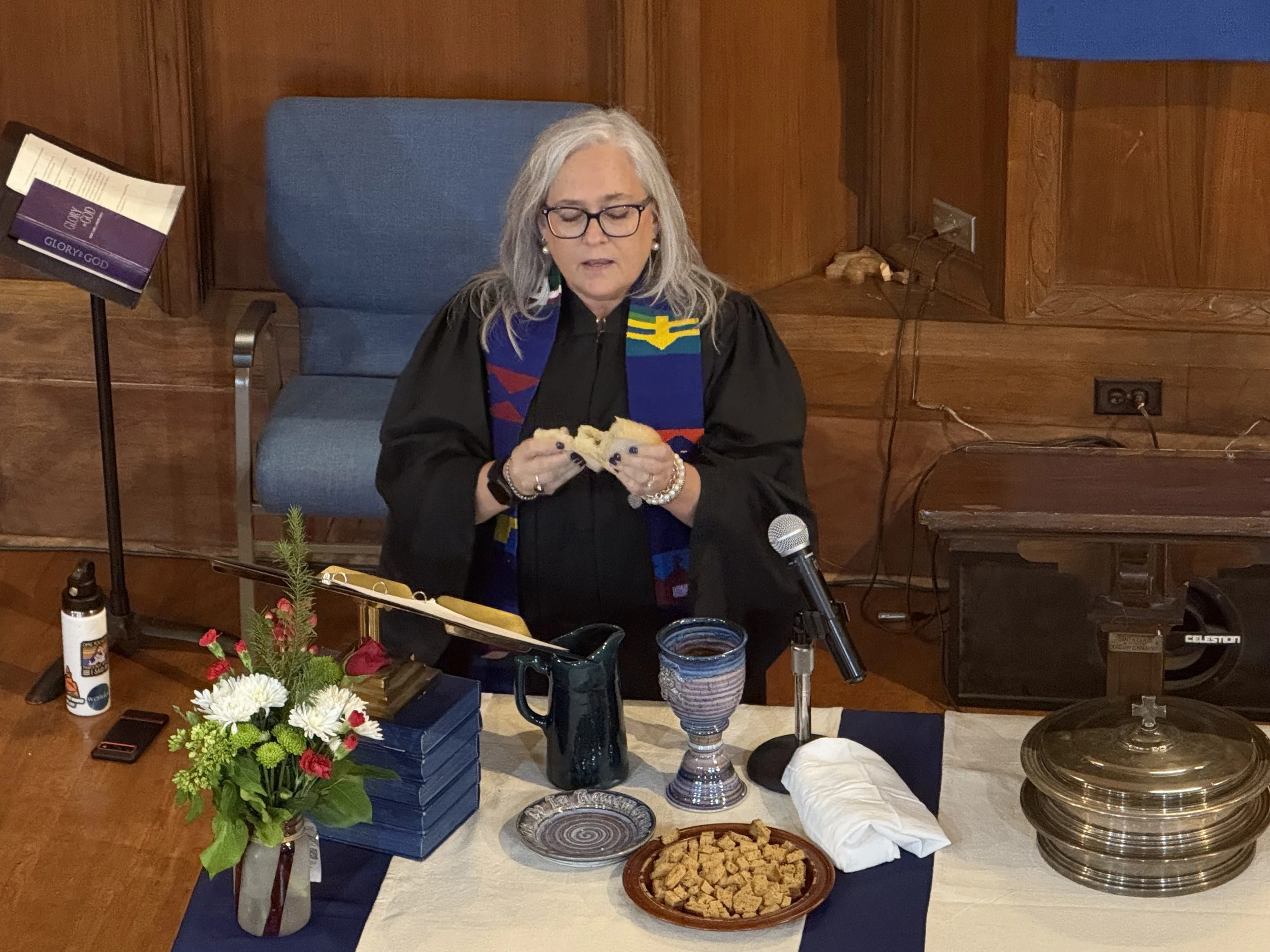
Photo: Gerald Farinas.
For a long time, I have found myself pushing back against a specific kind of religious elitism that really gets under my skin. It is the claim made by some traditionalist Roman Catholics (think Latin-language adherents) that Jesus is only truly present in their Mass, and that any other gathering, especially those of us in the Reformed tradition, is essentially just playing house.
The argument usually goes like this. If you don’t have a specific kind of priest standing at a specific kind of stone or wood altar performing the sacrifice of the Mass, you’re in theological error. They claim that we have turned the Sacrament into a hollow reenactment and that we’ve limited Christ to a memory.
But there is a massive irony in that. To say that the Creator of the universe can only be found in one specific building, under one specific set of physical rules, feels incredibly small. It tries to put a limit on a God that is supposed to be beyond human understanding.
By narrowing salvation down to only where a person can physically obtain their version of the Eucharist, they aren’t just excluding other Christians. They are trying to fence in the Holy Spirit.
We need to put one major myth to bed right now! It’s the idea that the Presbyterian Church (U.S.A.) or the broader Reformed rite believes the bread and wine are "just symbols."
If you aren't a church person, think of it this way. Imagine you have a wedding ring. To some, it’s just a piece of gold. To others, it’s a symbol that reminds them of their spouse. But in the Reformed tradition, the Sacrament is more like a legal seal on a deed or a signed contract. It doesn't just represent the house; it is the thing that actually gives you the house. It carries the weight and the reality of the promise.
This isn't just my opinion. It’s the foundation of our tradition. John Calvin, one of the primary architects of the Reformed rite, was very clear that the Sacrament is a "spiritual exhibition" of Christ. He argued that it is a "high mystery" which he'd rather experience than try to fully explain.
For Calvin, and for theologians like Peter Martyr Vermigli, the Holy Spirit acts as a bridge. They taught that while Christ’s physical body remains in heaven, the Holy Spirit truly feeds our souls with the actual substance of Christ's life during the meal. There is indeed a “real presence” of Christ.
When we gather at the Communion table, we aren't just having a snack and thinking about a historical figure who died a long time ago. We believe a genuine Mystery is happening. We believe that through the power of the Holy Spirit, we are truly nourished by the life of Christ.
We don't need a complicated philosophical theory about "substance" and "accidents" to make it real. It is real because God said it is.
The pride involved in dismissing this is what really stings. It suggests that if you don't use their specific "how-to" manual for worship, your experience of the Divine is somehow fake. But the Gospel tells a different story. It tells us that the Spirit blows where it wants. It tells us that Christ is the host of the Table, not any one denomination.
In our tradition, the Table is open. We don't put up walls because we believe the grace of the Sacrament is too big for walls. Christ is not a prisoner of the altar. He is a living presence who meets us in the Word, in the community, and yes, very truly in the bread and the cup. To call that a "mere symbol" isn't just a misunderstanding of our faith. It’s an insult to the Mystery itself.