Theology 101: Our Presbyterian relationship with the ‘Mother of God’
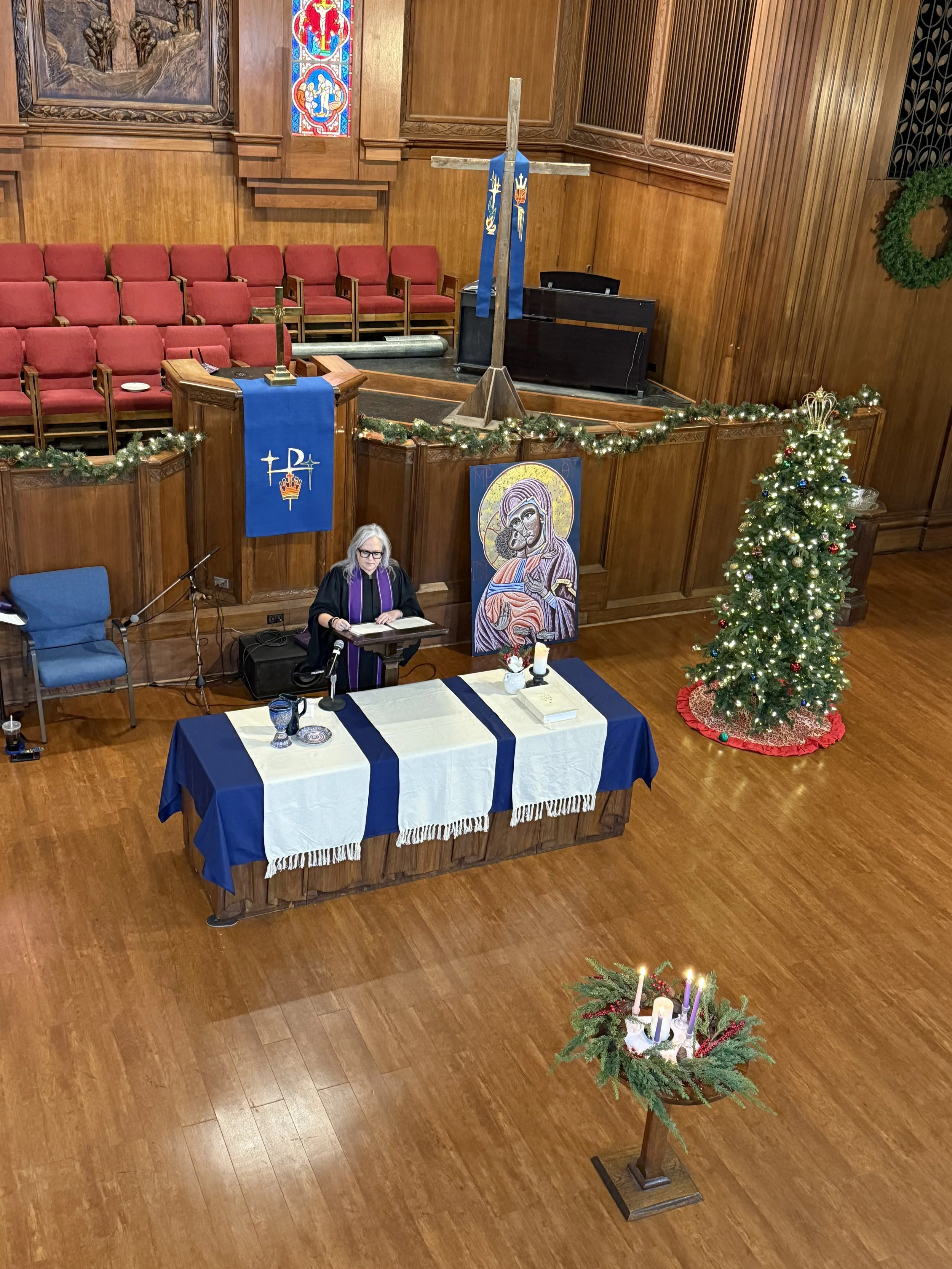
Photo: Gerald Farinas.
When visitors enter the Sanctuary at Edgewater Presbyterian Church, their eyes are often drawn to a striking centerpiece. It’s a massive, heavy icon of the Theotokos. This sacred image was written by the Rev. Nanette Sawyer.
Given the historic iconoclasm of the Presbyterian tradition, which once strictly banned religious imagery in favor of plain walls and the spoken word, this icon often sparks deep questions about our theology and how we view the mother of Jesus today.
The core of the title
The question of whether Mary is the Mother of God traces back to the Council of Ephesus in 431.
The term used then was Theotokos, or "God-bearer." It is a title that can feel heavy or even foreign to some Protestant ears, yet its original purpose was deeply grounded in our understanding of Jesus.
To call Mary the Mother of God was not an attempt to elevate a human being to the level of the divine, but rather a fierce defense of the divinity of Christ. It served as a landmark declaration that the child born in Bethlehem was not merely a prophet or a gifted teacher, but God in the flesh from the very beginning.
For us, accepting this title is an act of theological precision. If we believe that Jesus is truly God and truly human, then we must acknowledge that Mary gave birth to the person of the Son of God.
In this light, the title is less about Mary’s status and more about the miracle of the incarnation.
Mary as a model of faith
While we honor Mary’s unique role, our tradition views her primarily as a sister in faith. We see in her the ultimate example of what it looks like to say yes to God’s calling.
When the angel Gabriel appeared, Mary’s response was one of radical trust and humility. She represents the Church at its best. Meaning, a community that hears the word of God and carries it into the world.
We do not view Mary as a mediator or someone to whom we offer prayer. Instead, we see a woman who, like us, lived a life of faith, faced immense uncertainty and stood at the foot of the cross in grief.
She is a witness to the grace of God that uses ordinary people to accomplish extraordinary things. She is a reminder that God chooses to work through human history and human lives.
Language and devotion
In our worship and daily lives, many of us find comfort in the language used by Elizabeth in the Gospel of Luke, where she calls Mary “the mother of my Lord.”
This phrasing captures the reverence we feel for her without the potential confusion that the more ancient title might bring. It emphasizes that Mary’s significance is entirely derived from her relationship to Jesus.
The presence of the icon in our Sanctuary serves as a bridge between our iconoclastic past and our present commitment to a multisensory faith.
It does not replace the preaching of the Word; rather, it makes the Word visible.
As we reflect on her story, we are invited to consider our own role in the story of God. Mary was the vessel through whom the Word became flesh.
While we are not called to that same historical task, we are called to be people who bear Christ’s love, justice and peace in our own neighborhood and beyond.
We honor her legacy best when we follow her lead in pointing others toward the Son she bore.