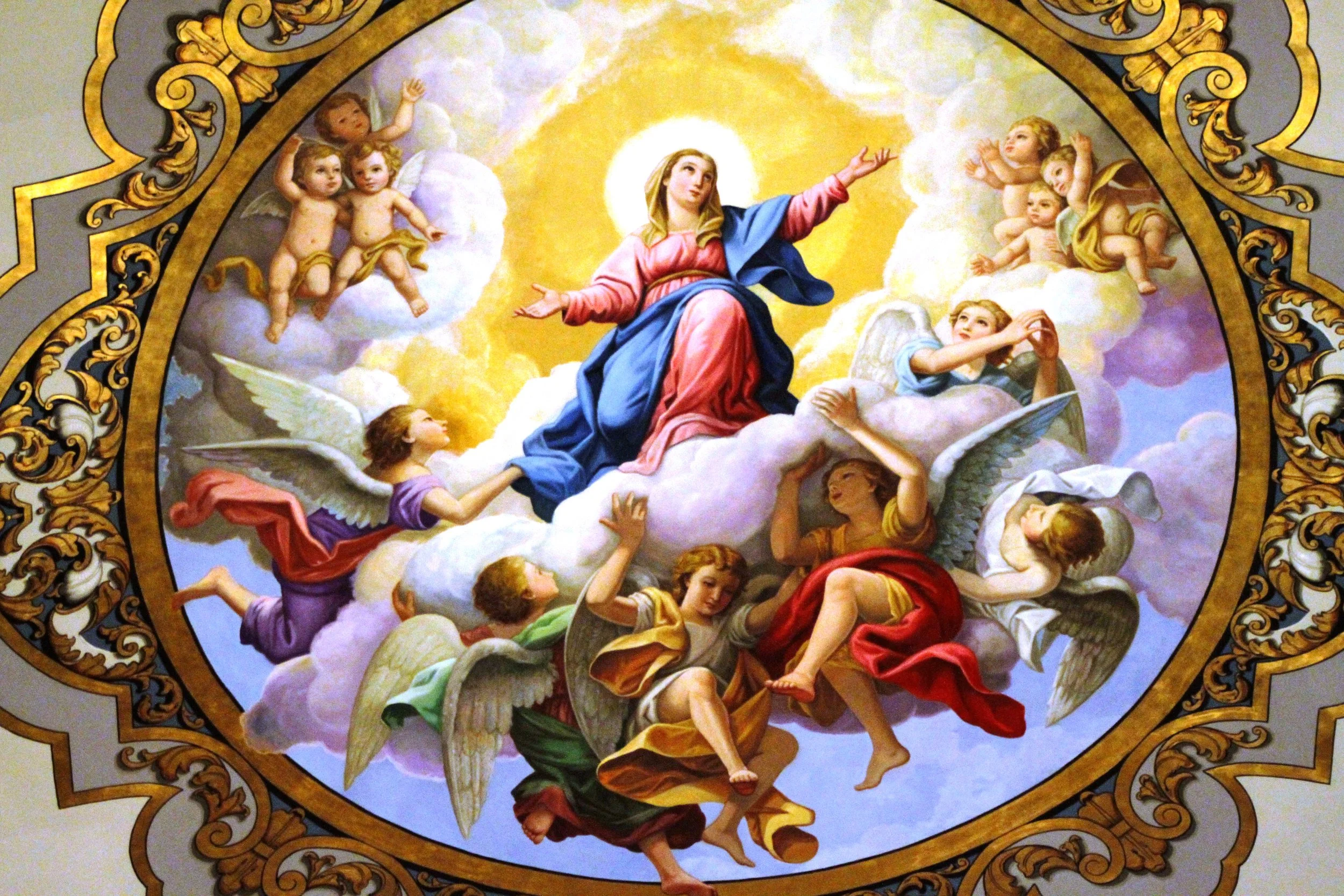
Photo: Wikimedia Commons.
In many Christian traditions, Mary, the mother of Jesus, holds a very special and honored place. Roman Catholics and some Anglicans, including many Episcopalians, believe that Mary was taken up into heaven, body and soul, at the end of her earthly life. This is called the Assumption of Mary.
Presbyterians deeply respect Mary as the one chosen to bear God’s Son and to help bring the Gospel into the world. However, we do not teach or celebrate the doctrine of her bodily assumption. Here’s why, in simple terms.
Scripture and the Reformed tradition
Presbyterians are part of the Reformed family of churches. We believe that everything we teach about God, salvation, and the life of faith must be based on Scripture.
The Bible does not record Mary’s bodily assumption, and so we do not make it a part of our official teaching.
This does not mean we doubt Mary’s holiness or importance. We simply choose not to declare something as a matter of faith if it is not clearly found in the Bible.
What we believe about Mary
Presbyterians honor Mary as the Theotokos, or God-bearer, who gave birth to Jesus Christ, fully God and fully human.
We see her as a model of faith, a young woman whose “yes” to God in Luke 1 shows deep trust and obedience.
We believe her to be blessed among women, as Scripture says, “Blessed are you among women, and blessed is the fruit of your womb” (Luke 1:42, NRSVue).
For us, Mary is a faithful servant of God and an example of what it means to follow God’s call with courage and humility.
Respecting other traditions
Our Catholic and Anglican siblings teach the Assumption as a way of showing Mary’s unique role in salvation history and her closeness to Christ.
Presbyterians respect this devotion. We can appreciate the beauty of their theology even if we do not share every detail.
The heart of our faith
Presbyterians emphasize that Jesus Christ alone is our Savior and that he has promised eternal life to all who trust in him. While we honor Mary, our focus is always on Christ’s death and resurrection as the source of our salvation.
In this way, our different beliefs about Mary remind us of the diversity of the Christian family. We can learn from one another while staying true to our own understanding of Scripture.