We can have a variety of liturgical styles and still be One Church
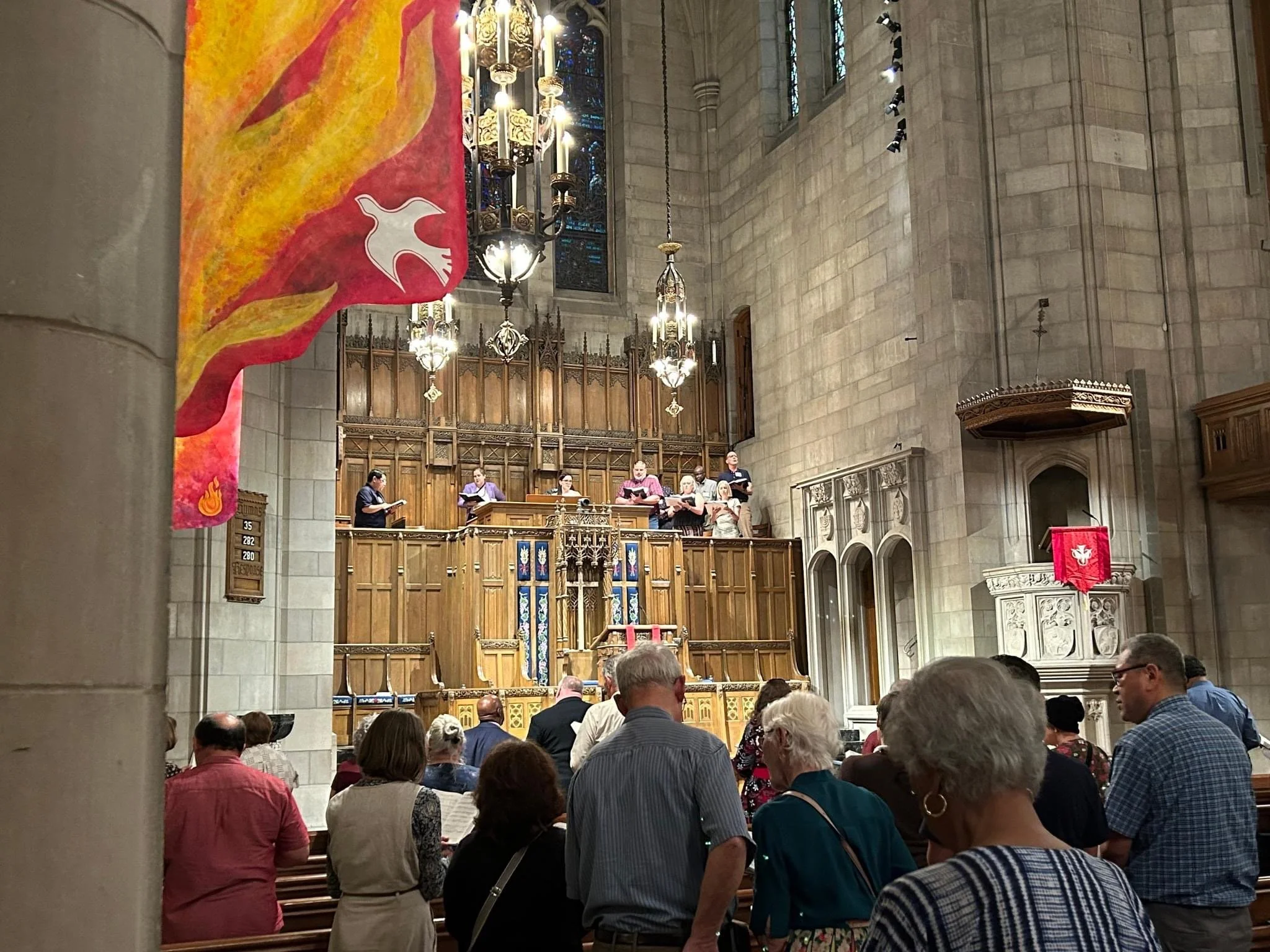
Presbytery Assembly at Fourth Presbyterian Church, Chicago, Ill. Photo: Presbytery of Chicago.
Liturgical differences have inflamed and caused huge divides among Catholics and mainline Protestants the same. Popes Francis and Leo have had to deal with traditionalists insistent on the Latin Mass as the only true form of worship. In my own Presbyterian context, similar to Episcopalians and Lutherans, we have traditional High Church loyalists versus fans of contemporary worship.
I like the hybrid we have at Edgewater Presbyterian Church with one contemporary song provided before the Word and sermon.
But these divides are nonsense. The main point of worship is showing reverence for God in both Word and Sacrament. The impassioned divisions we have made over liturgical styles only restrain us from being the one Church of Christ. We can still be that One Church even with our differences.
Looking across the wider landscape of faith, you start to realize how much time and breath get wasted on things that ultimately do not matter in the grand scheme. Catholics deal with deep friction between the post-Vatican II vernacular mass and folks dug in on the Latin Rite.
Over in mainline Protestantism, you see the exact same turf wars played out with pipe organs versus acoustic guitars, rigid prayer books versus free-form praise, and robes versus casual flannels.
People get so bent out of shape over the aesthetics that they forget why everybody walked through those church doors in the first place.
It is a distraction from what actually counts. At the end of the day, the main point of worship is showing reverence for God in both Word and Sacrament. Whether the liturgy follows a centuries-old bulletin or features a newly written chorus, the whole point is pointing hearts and minds toward divine grace.
Getting caught up in whether a service is too formal or too informal completely misses the theological plot. God is not checking off boxes on whether the choir hit every note or whether the band used a synth pad.
When congregations fracture over preferences in music or vestments, the witness of the whole Church takes a hit to the chin. The impassioned divisions we have made over liturgical styles only restrain us from being the one Church of Christ.
Uniformity has never been a requirement for unity. The global body of faith has always held a rich diversity of expressions, languages, and cultural traditions. Trying to force everybody into the exact same mold does not create faithfulness; it just creates division.
True fellowship does not demand that everyone worships in the exact same way. We can still be that One Church even with our differences.