Huldrych Zwingli: The guy who laid the foundations for Reformed Christianity
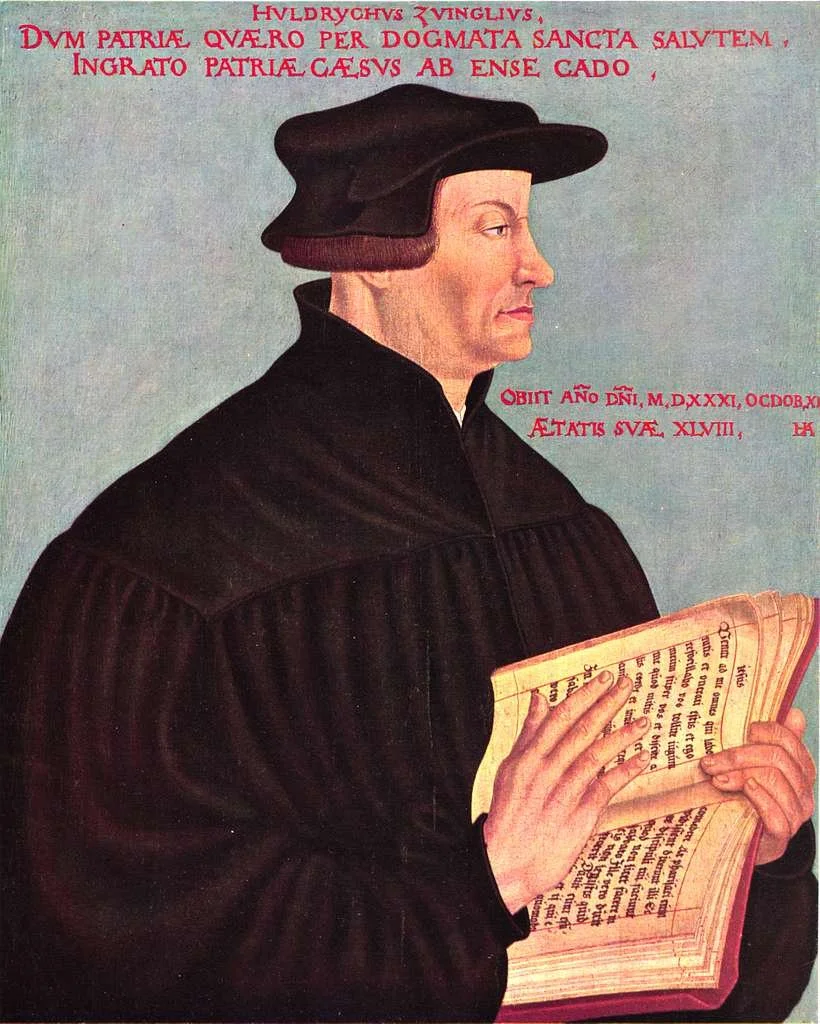
Illustration: PICRYL.
When we think about the origins of the Church, names like Martin Luther or John Calvin usually come to mind. However, for those of us in the Presbyterian Church (USA), there is another figure whose influence is woven into the very fabric of our worship and community life.
The Rev. Fr. Huldrych Zwingli, a Catholic priest in Zurich during the early 1500s, was the true spark of the Reformed tradition. While he is often overshadowed by his contemporaries, his bold vision for what a faith community could be continues to shape how we experience God today.
A radical return to the Word
Zwingli was a scholar who believed that the Christian life should be rooted directly in the source. In 1519, he did something that shocked his congregation. He set aside the traditional lectionary and began preaching through the Gospel of Matthew, verse by verse.
This commitment to the Bible is a primary reason why Presbyterian worship centers on the proclamation of the Word. If you appreciate a sermon that dives deep into the context and meaning of Scripture, you are participating in a style of ministry that Zwingli pioneered five centuries ago. He believed that the Bible was not just for priests to interpret in secret, but for the entire community to study and live out together.
The table and the symbol
One of the most significant ways Zwingli shaped our identity was through his understanding of the Sacraments. During a famous and heated debate with Martin Luther, Zwingli argued that the Lord’s Supper was a memorial and a spiritual feast rather than a physical transformation of bread into flesh.
He wanted to ensure that the congregation did not treat the elements like magic. Instead, he emphasized that when we gather at the table, we are joining in a "covenant sign" that reminds us of Christ’s sacrifice and our unity as a body of believers.
While the Reformed tradition eventually moved toward a "spiritual presence" (it’s not merely a symbol) view under John Calvin, Zwingli’s insistence on the power of the meal as a sign and seal of the covenant between us and God remains a cornerstone of our Presbyterian perspective.
Faith in the public square
Zwingli did not believe that faith belonged only inside the walls of a church building. He was a patriot and a civic leader who believed the Gospel should transform the city of Zurich. He pushed for reforms that addressed poverty, justice, and the moral health of the community.
As Presbyterians, we carry this torch today. Our commitment to social justice and our belief that the Church should be a voice for the marginalized in our neighborhood are direct descendants of Zwingli’s "public theology." He taught us that being a follower of Christ means being a concerned and active citizen.
A complex ancestor
Like all figures in history, Zwingli was a man of his time. He could be rigid, and his involvement in religious wars eventually led to his death on the battlefield. Yet, his legacy is a reminder that the Church is "reformed and always being reformed." He challenged the status quo because he believed the Church could be more faithful, more transparent, and more focused on Jesus.
As we reflect on our roots at Edgewater Presbyterian Church, we can find inspiration in Zwingli’s courage to open the Bible and ask, "How is God calling us to change today?"