One Presbyterian’s view of the Shroud of Turin
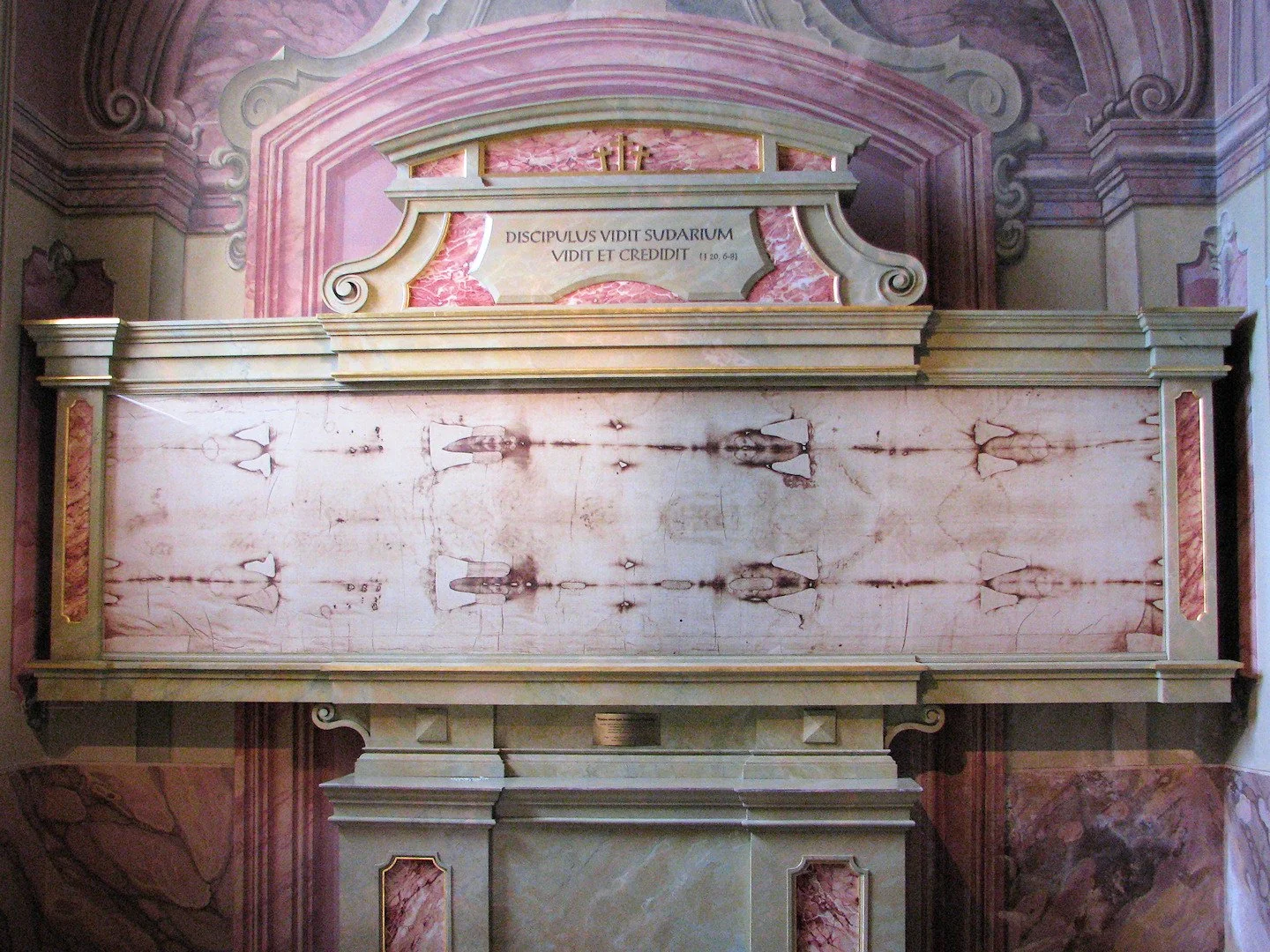
The Shroud of Turin. Photo: Wikimedia Commons.
I have spent a lot of time thinking about the Shroud of Turin, and I find myself stuck in a very specific tension. To be honest, I have plenty of doubts. The science is messy, the history has huge gaps, and a part of me thinks it is almost certainly a very clever, very old piece of art.
I am not someone who feels a deep internal need to believe the Shroud is an authentic relic. In fact, I am quite comfortable with the idea that it might be a forgery.
But even with those doubts, I think there is a real defense to be made for why it matters that the Shroud exists and why it holds such power for so many.
In our Reformed tradition, we have to grapple with a history of iconoclasm. During the Reformation, many of our spiritual forefathers and foremothers felt that objects like this were dangerous. They saw the veneration of relics as something bordering on heresy because it risked putting a physical object in the place of God.
There was a deliberate movement to strip churches of images and statues to ensure that nothing came between the believer and the Word. So, looking at the Shroud through a Presbyterian Church (U.S.A.) lens means acknowledging that, for a long time, such things were considered a distraction at best and a theological error at worst.
Yet, despite that history, the value of something like the Shroud isn't necessarily about whether it is real in a laboratory sense. In the Church, we believe God became a real, physical person. Because of that, having something physical to look at helps us understand the Gospel better.
Even if I am not sure that cloth touched Jesus, looking at the image forces me to think about the physical reality of the Passion. It makes the suffering of the Gospel feel less like a story in an old book and more like something that actually happened to a human body. It turns the abstract idea of sacrifice into something I can almost touch.
I also think about how the Shroud works like an icon. In religious life, we use things to point us toward God. If a person looks at the Shroud and feels moved to pray, or if it helps them understand the depth of God's love, then the object is doing holy work. Its truth is found in the way it changes the person looking at it.
Even with my own questions about its origins, I can't deny that it has served as a catalyst for devotion for millions of people. It is a tool for faith, and a tool doesn't have to be perfect to be useful.
There is also something special about the fact that we can't prove it one way or the other. If we had a DNA test or a perfect paper trail, it wouldn't require faith anymore; it would just be a fact.
But faith usually lives in that uncomfortable space where we don't have all the answers. The Shroud mirrors that experience. It invites us to wonder and to seek understanding without giving us an easy out. For someone like me, who values the intellectual side of our tradition but still feels the weight of the miraculous, the mystery itself is the point.
Finally, the Shroud is a witness to how long this story has lasted. It has survived through fires and wars and centuries of people trying to debunk it, yet it is still here. It shows how much humans long for a connection to Jesus.
Whether it is a miracle or a beautiful tribute created by a medieval believer, it represents a bridge across two thousand years. It keeps the conversation about the Resurrection alive in a world that often wants to move past it. Even with all my skepticism, I find a lot of beauty in the fact that a simple piece of linen can still make us stop and think so deeply about the Divine.